











Mastering Basic Egg Cooking Techniques: The Definitive Guide for Home Cooks
The humble egg is often cited by professional chefs as the ultimate litmus test of a cook’s skill. It is a marvel of biological engineering—versatile, nutrient-dense, and capable of transforming from a liquid state into a dizzying array of textures. Whether you are aiming for the pillowy clouds of a perfect scramble or the glass-like elegance of a French omelet, mastering egg cookery is the foundational step in moving from a novice to a confident home chef. As we look toward the culinary trends of 2026, the focus has shifted back to these essential, “back-to-basics” skills. In an era of complex kitchen gadgets, the ability to manipulate heat and protein using nothing but a simple skillet remains the hallmark of a true enthusiast. This guide will walk you through the essential techniques required to master the egg, ensuring that every breakfast, brunch, or midnight snack you prepare is executed with professional-grade precision.
1. The Art of the Scramble: From American Style to French Custard
Scrambled eggs are perhaps the most common preparation, yet they are frequently the most misunderstood. Most home cooks are accustomed to “American-style” scrambled eggs—large, fluffy curds cooked over medium-high heat. While delicious, this is only one side of the story. To truly master the scramble, one must understand the relationship between heat and agitation.
For the classic **American Scramble**, the key is a hot pan and a quick hand. You want to whisk your eggs thoroughly until no streaks of white remain, incorporating air for lift. Use a tablespoon of butter in a non-stick skillet; once it foams, pour in the eggs. Use a silicone spatula to push the eggs from the edges to the center, creating large, undulating folds. The secret is to remove the pan from the heat when the eggs still look slightly wet—the residual heat will finish the cooking process on the plate.
Conversely, the **French Scramble** is a lesson in patience. This technique involves cooking the eggs over incredibly low heat (or even a bain-marie) with constant stirring. Instead of large curds, you aim for a texture similar to a thick porridge or custard. This method requires cold butter cubes added at the beginning and a finish of crème fraîche at the end to stop the cooking. In 2026, this “slow-food” approach to breakfast has regained popularity for its luxurious mouthfeel and sophisticated presentation.
2. The Perfect Poach: Conquering the Whirlpool
Poaching an egg is often viewed with trepidation by home cooks, but it relies more on physics than luck. A perfect poached egg should have a tender, opaque white that completely enshrouds a warm, liquid yolk. To achieve this, freshness is your greatest ally. As eggs age, the proteins in the whites break down and become watery, leading to those unsightly “wisps” in the boiling water.
To master the technique, bring a deep saucepan of water to a bare simmer—look for small bubbles rising like champagne, not a rolling boil. A teaspoon of white vinegar can help the proteins coagulate faster, though it isn’t strictly necessary if your eggs are farm-fresh. The “fine-mesh strainer trick” is a game-changer: crack your egg into a strainer first to let the thin, watery part of the white drain away.
When you’re ready, create a gentle vortex (whirlpool) in the water with a spoon and drop the egg into the center. The spinning water wraps the white around the yolk. Cook for exactly three to four minutes. The result should be a delicate, teardrop-shaped orb that elevates any piece of sourdough toast or avocado mash into a gourmet meal.
3. Fried Eggs: Sunny-Side Up, Over-Easy, and the Crispy Edge
Fried eggs offer a delightful contrast in textures: the crispy, caramelized bottom versus the rich, fatty yolk. There are three primary styles to master:
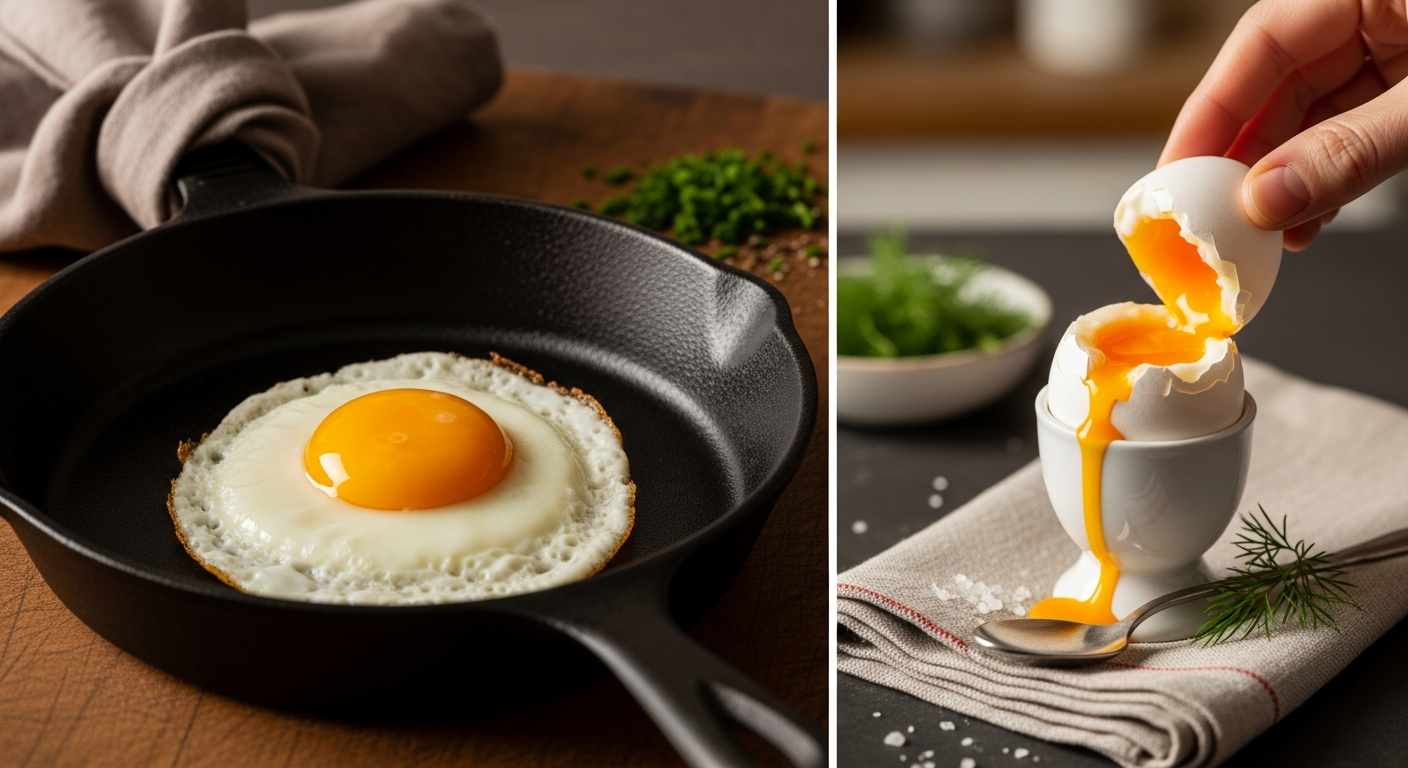
* **Sunny-Side Up:** The egg is fried without flipping. The challenge here is ensuring the whites are set while the yolk remains completely liquid. To achieve this without burning the bottom, use medium-low heat and cover the pan with a lid for the last 30 seconds. The steam trapped under the lid will “cook” the top of the whites perfectly.
* **Over-Easy/Medium:** This requires the “flip.” Once the whites are mostly set, a confident flick of the wrist (or a thin spatula) turns the egg over. For “over-easy,” cook for only 30 seconds more; for “over-medium,” wait a full minute until the yolk begins to thicken slightly.
* **The Olive Oil Crispy Egg:** A favorite in 2026 kitchens, this method uses a generous amount of olive oil over medium-high heat. You essentially shallow-fry the egg, spooning hot oil over the whites to create “frizzled,” brown, lacy edges while the yolk stays runny. It adds a nutty, savory dimension that butter-fried eggs lack.
4. The Omelet: French Elegance vs. Country Heartiness
An omelet is a canvas for creativity, but the technique differs wildly depending on the style. The **French Omelet** is the gold standard of egg cookery. It should be smooth, pale yellow (no browning whatsoever), and shaped like a silken cigar. This requires high heat, a lot of butter, and constant agitation with a fork or spatula to keep the curds tiny. The moment the eggs are set but still slightly “baveuse” (moist) in the center, you roll it onto the plate.
The **Country-Style (or American) Omelet** is more forgiving and robust. It is cooked over medium heat, allowing the eggs to develop a golden-brown crust. This style is designed to hold heavy fillings like sautéed mushrooms, sharp cheddar, or diced ham. Unlike the French version, which is folded into thirds, the country omelet is usually folded in half. Mastering both allows you to pivot between a refined brunch and a hearty, filling breakfast.
5. Hard and Soft Boiled: The Science of Timing and Peeling
Boiling an egg seems simple until you encounter a rubbery white, a chalky green-ringed yolk, or a shell that refuses to peel. The secret to the “perfect boil” is the hot-start method. Lowering eggs into already boiling water (and then dropping the heat to a simmer) makes the shells easier to peel because the thermal shock causes the membrane to pull away from the shell.
**The 2026 Timing Guide:**
* **6 Minutes:** The “Jammy” Egg. The white is set, but the yolk is liquid gold. Perfect for ramen or toast.
* **8 Minutes:** The Creamy Egg. The yolk is fudgy and set but still vibrant.
* **12 Minutes:** The Classic Hard-Boiled Egg. Fully set for deviled eggs or salads, without the sulfurous green ring.
Immediately after the timer goes off, plunge the eggs into an “ice bath” (a bowl of ice and water). This stops the cooking instantly and further aids in peeling. To peel, gently crack the shell all over and start from the wider end where the air pocket resides.
6. Essential Tools and Sourcing for Success
You cannot master eggs with poor equipment. A high-quality **non-stick skillet** (8-inch or 10-inch) is non-negotiable. Look for PFOA-free coatings or well-seasoned carbon steel, which offers the slickness of non-stick with the longevity of cast iron. Additionally, a **silicone spatula** is your best friend; its flexibility allows you to scrape the curves of the pan, ensuring no egg is left behind to overcook.
Equally important is the quality of the egg itself. In 2026, the movement toward pasture-raised, local eggs has moved from niche to mainstream. Eggs from hens allowed to forage have higher levels of Omega-3 fatty acids and vibrant, orange yolks that provide a richer flavor profile. When the ingredient list is this short, the quality of that ingredient becomes the defining factor of the dish. Store your eggs in the main body of the refrigerator—not the door—to maintain a consistent temperature and maximize shelf life.
***
FAQ: Troubleshooting Your Egg Cooking
**Q: Why do my scrambled eggs always “leak” water on the plate?**
A: This is known as syneresis. It happens when eggs are cooked over heat that is too high or for too long. The protein molecules tighten so much that they squeeze out the moisture. To prevent this, cook over lower heat and remove them while they still look slightly underdone.
**Q: How can I tell if my eggs are still fresh?**
A: Use the “Float Test.” Place the egg in a bowl of water. If it sinks to the bottom and stays flat on its side, it is very fresh. If it stands upright on the bottom, it’s older but still good to eat. If it floats to the surface, the air pocket has grown too large, and the egg should be discarded.
**Q: Do I really need to add vinegar to poaching water?**
A: It helps, but it’s not a magic fix. The acid in vinegar helps the egg whites coagulate faster. However, if you use too much, the eggs will taste like vinegar and the whites can become tough. A teaspoon is plenty.
**Q: My omelet always breaks when I try to fold it. What am I doing wrong?**
A: Usually, this is caused by either a pan that is too large (making the egg layer too thin) or overstuffing the omelet. Try using an 8-inch pan for a 2-3 egg omelet and keep your fillings to about 2-3 tablespoons. Also, ensure the bottom is fully set before attempting the fold.
**Q: Is it better to salt eggs before or after cooking?**
A: This is a debated topic, but modern science suggests that salting scrambled eggs about 15 minutes before cooking (pre-salting) actually helps keep them tender. The salt acts as a buffer between the proteins, preventing them from bonding too tightly and getting tough. For fried or poached eggs, salt at the very end to maintain the integrity of the yolk’s appearance.
***
Conclusion: The Journey to Culinary Confidence
Mastering egg cooking techniques is more than just a way to prepare breakfast; it is a gateway to understanding the broader principles of heat management, texture, and timing. By moving through these stages—learning the difference between a French and American scramble, conquering the poached egg vortex, and dialing in your boiling times—you develop a “feel” for the kitchen that translates to every other dish you prepare.
As we move through 2026, the trend in home cooking continues to lean toward high-quality ingredients treated with respect and technical precision. There is a profound satisfaction in taking a simple, inexpensive ingredient and turning it into something sublime. Whether you are hosting a formal brunch or simply looking to improve your daily routine, these techniques provide the foundation for a lifetime of delicious, egg-centric creations. Keep practicing, don’t fear a broken yolk or two, and remember that even the greatest chefs started with a single egg and a hot pan.