











The Art of a Well-Ordered Pantry: Where Southern Charm Meets Modern Efficiency
Sweet friend, imagine this: you open your pantry door, and instead of a chaotic avalanche of half-empty bags and forgotten cans, you’re greeted by a beautifully organized haven. Every jar sparkles, every basket holds its treasures, and finding exactly what you need is an effortless dance. This isn’t just a dream – it’s the heart of a truly joyful kitchen, a space where Southern hospitality can flourish with ease and everyday meals become a pleasure, not a puzzle. At Rock Salt Plum, we believe your home should be both beautiful and brilliantly functional, and nowhere is this more evident than in the unsung hero of your kitchen: the pantry. Join us as we transform this essential space from a storage afterthought into a gleaming testament to gracious living.
The Grand Purge: Your Foundation for Flourish
Before we dive into the delightful details of containers and labels, every successful pantry transformation begins with a liberating purge. Think of it as clearing the canvas before painting a masterpiece. This step is non-negotiable and, dare I say, incredibly satisfying!
-
Empty Every Single Shelf
-
Ruthless Review: Discard, Donate, Decide
- Is it expired? Check those dates! Anything past its prime goes straight into the discard pile. Be brave – no one needs that ancient bottle of spices from a decade ago.
- Is it nearly empty or just a tiny bit left? If it’s less than a quarter full and you haven’t used it in ages, consider discarding it or consolidating it if possible.
- Will I truly use this? Be honest. That exotic ingredient you bought for one recipe two years ago? If it’s still sitting there, it’s likely not going to be used.
- Is it unopened and unexpired, but I won’t use it? This is a perfect candidate for donation to a local food bank. Share the abundance, sweet friend.
-
Deep Clean and Reset
-
Take Inventory: The Smart Shopper’s Secret
Yes, darling, every last item. Pull everything out of your pantry, cupboards, and any overflow areas. Lay it all out on your kitchen counters, dining table, or even a clean sheet on the floor. Seeing everything at once can be overwhelming at first, but it’s crucial for truly understanding what you have.
Now comes the honest assessment. Pick up each item and ask yourself:
This is also the moment to address any items that don’t belong in the pantry at all. Cleaning supplies, pet food, or non-food items should find a home elsewhere.
With your pantry empty, seize the opportunity for a sparkling clean. Wipe down every shelf, wall, and crevice. Use a gentle, all-purpose cleaner or a simple vinegar and water solution. For stubborn crumbs or sticky spots, a little elbow grease goes a long way. This fresh start is not just practical; it’s symbolic of the beautiful new beginning you’re creating.
Before you put a single thing back, take stock of what remains. Group similar items together (all your baking supplies, all your pasta, all your snacks). This gives you a clear picture of what you truly have, preventing duplicate purchases and helping you plan your next grocery trip with precision. Make a running list of staples you’re low on and items you might need to purchase to enhance your new organization system.
This initial purge is the most time-consuming step, but it’s the bedrock of a successful pantry. Once it’s done, the rest of the process feels like a delightful puzzle, fitting beautiful pieces into a clean, inviting space.
Designing for Delight: Crafting Your Pantry’s Zones
Now that your pantry is gleaming and only cherished items remain, it’s time to design a layout that truly serves your lifestyle. Think of your pantry not just as storage, but as a mini-supermarket tailored to your family’s needs, where every item has a purpose and a place. The goal is intuitive access, making meal prep and even impromptu entertaining feel effortless.
-
Map Out Your Zones
- Baking Zone: Flours, sugars, leavening agents, extracts, sprinkles, chocolate chips. Keep these together for easy grab-and-bake sessions.
- Breakfast & Grains: Cereals, oats, granola, pancake mix, rice, quinoa, pasta.
- Snack Central: Granola bars, crackers, dried fruit, nuts, chips. Make this accessible for little hands if you have children, or for quick grabs during a busy day.
- Canned Goods & Jars: Soups, beans, vegetables, sauces, jams.
- Spices & Seasonings: We’ll talk more about this vital section in a moment!
- Oils, Vinegars & Sauces: Cooking oils, specialty oils, balsamic, soy sauce, hot sauces.
- Everyday Essentials: Items you reach for constantly – coffee, tea, often-used spices, sugar.
- Bulk Items/Infrequently Used: Large bags of rice, extra paper towels, seasonal servingware. These can go on higher or lower shelves.
-
Consider Accessibility & Frequency of Use
- Eye Level: This is your most valuable space. Reserve it for the items you use most frequently – everyday spices, cereals, pasta, cooking oils.
- Waist Level/Middle Shelves: Great for heavier items that you still use often, like canned goods, jars, and baking ingredients.
- Lower Shelves: Ideal for bulkier, heavier items that are used less often. Think large bags of flour or sugar, extra bottled water, or even a designated spot for onions and potatoes in breathable baskets.
- Top Shelves: Reserve these for overflow, seasonal items (like holiday baking supplies), or items you only use a few times a year (e.g., specialty preserving jars). A sturdy step stool is your friend here!
-
Maximize Every Inch: Walk-in, Cabinet, or Pull-Out?
- Walk-in Pantries: Embrace the depth! Consider U-shaped shelving, a small rolling cart for extra storage, or even a stylish rug to define the space. Door backs are fantastic for spice racks or shallow shelves.
- Cabinet Pantries: Focus on vertical solutions like tiered risers for cans and spices. Pull-out drawers or bins can make deep cabinets much more functional.
- Pull-Out Pantries: These narrow wonders are efficiency personified. Ensure your items are well-contained in bins or jars so they don’t tip over when pulled out.
The key to an efficient pantry is creating distinct zones for different categories of food. This prevents the “I know it’s in here somewhere!” frustration. Consider these common zones, and adapt them to your family’s habits:
Think vertically! Your pantry has prime real estate, and how you assign it matters:
No matter the size or style of your pantry, there are always ways to optimize:
By thoughtfully planning your zones and considering how you move through your kitchen, you’ll create a pantry that’s not just organized, but truly a joy to interact with – a hallmark of gracious Southern living where everything has its place and beauty meets practicality.
Stylish Storage Solutions: Bins, Baskets, and Beautiful Jars
Now for the fun part – selecting the gorgeous and practical vessels that will bring your vision to life! This is where your pantry truly transforms from mere storage into a display of elegant efficiency. The right containers don’t just organize; they elevate, protect, and make your pantry a beautiful extension of your home.
-
Airtight Containers: The Foundation of Freshness
- Materials:
- Clear Acrylic/Plastic: Lightweight, shatter-resistant, and perfect for easily seeing contents. Look for BPA-free options.
- Glass: Elegant, durable, non-porous, and a beautiful choice for displaying colorful grains or pasta.
- Ceramic/Stoneware: Opaque and beautiful for flours, sugars, or coffee. They add a rustic, charming touch, especially if they have wooden lids.
- What to Store: Flours, sugars, pasta, rice, oats, cereal, coffee beans, nuts, dried fruit, lentils, grains, baking mixes.
- Tip: Always measure your pantry shelves before purchasing containers to ensure a perfect fit! Look for stackable designs to maximize vertical space.
-
Baskets & Bins: Taming the Clutter in Style
- Materials:
- Woven Baskets (Rattan, Wicker, Hyacinth): Add natural texture and warmth, perfect for that Southern charm aesthetic. Great for snacks, produce (onions, potatoes – ensure good airflow), or overflow items.
- Wire Baskets: Modern, airy, and allow you to see contents easily. Ideal for fresh produce, cleaning supplies, or packaged snacks.
- Fabric Bins: Soften the space and are great for items you want to hide a bit, like extra linens or less-attractive packaging.
- Clear Plastic Bins: Practical for seeing everything at a glance, especially useful for kids’ snacks or small pantry items.
- What to Store: Snacks, baking mixes, individual packets (oatmeal, soup), extra napkins, cleaning rags, root vegetables, kids’ lunchbox items.
- Tip: Choose bins that fit snugly on your shelves to avoid wasted space, but also allow for easy removal.
-
Tiered Shelving & Risers: Lifting Your View
- Can Risers: Create stadium seating for your canned goods, making it easy to see every label and grab what you need.
- Spice Racks/Tiered Shelves: Elevate your spices for quick identification.
- Shelf Doublers: Instantly add an extra layer of storage within a tall shelf, perfect for plates, bowls, or smaller containers.
-
Lazy Susans (Turntables): The Spin Cycle of Organization
- What to Store: Oils, vinegars, sauces, condiments, small jars of jam, spices, vitamins, or baking extracts.
- Tip: Look for ones with a lip to prevent items from falling off, and consider non-slip bases.
-
Labels: The Finishing Touch of Clarity and Style
- Options:
- Handwritten: Charming and personal, especially on chalk labels or simple tags.
- Printed Labels: For a clean, uniform look. You can find beautiful font options online.
- Custom Vinyl Labels: A more polished, permanent solution that looks incredibly chic.
- Clip-on Labels: Versatile for baskets, allowing you to change contents easily.
- Tip: Be specific! “Flour” is good, but “All-Purpose Flour” or “Bread Flour” is better. Include expiration dates on the back or bottom of containers if you decant from original packaging.
-
The Great Spice Purge
-
Uniformity for Serenity
- Consider:
- Size: Choose a size that accommodates your typical spice quantities.
- Openings: Look for jars with shaker and pour lids, or wide mouths for easy spoon access.
-
Smart Storage Solutions for Every Pantry
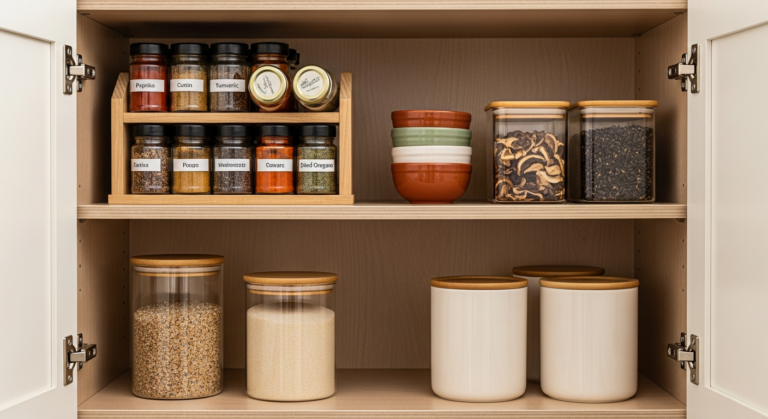
- Tiered Spice Racks: These are classics for a reason! They allow you to see all your spices at a glance when placed in a pantry cabinet or on a deep shelf.
- In-Drawer Spice Organizers: If you have a shallow drawer near your cooking zone, a slanted, in-drawer organizer keeps spices flat and easily readable. This is a favorite for many home cooks!
- Door-Mounted Racks: For walk-in or deeper cabinet pantries, a rack mounted on the inside of the door is an excellent way to utilize vertical space that often goes unused.
- Magnetic Spice Jars: If you have a metal backsplash or the side of a refrigerator in your pantry, magnetic jars can create a visually stunning and easily accessible display.
- Lazy Susans: Perfect for a small collection or for grouping frequently used spices on your counter or in a corner cabinet.
-
Labeling for Quick Identification
- Organization Method:
- Alphabetical: The most common and intuitive method for larger collections.
- By Cuisine: Grouping Italian spices, Mexican spices, Indian spices, etc., can be helpful if you cook specific cuisines frequently.
- By Frequency of Use: Keep your everyday favorites (salt, pepper, garlic powder) front and center, with less-used spices further back.
-
Embrace Freshness: Small Batches & Whole Spices
-
The “One Touch” Rule
-
Regular Mini-Purges and Restocks
- Check Expiration Dates: Quickly scan for anything nearing its expiry and plan meals to use it up.
- Wipe Down Spills: Address any crumbs or sticky spots as soon as they happen, or during your monthly check.
- Top Off Containers: Refill your airtight containers from any bulk bags you might have.
- Adjust & Tidy: Straighten baskets, realign jars, and make sure everything is where it should be.
-
Shop Your Pantry First
-
Implement FIFO (First In, First Out)
-
Involve the Family
-
Treat Your Pantry Like a Cherished Space
For dry goods, airtight containers are non-negotiable. They keep food fresher longer, deter pests, and create a wonderfully uniform, clean aesthetic. Imagine a row of matching, sparkling containers – pure bliss!
Baskets and bins are your secret weapon for corralling oddly shaped items, keeping categories together, and adding a layer of texture and warmth. They’re also fantastic for creating “grab-and-go” stations.
These ingenious tools are game-changers for maximizing vertical space and ensuring nothing gets lost in the back of a deep shelf.
Oh, the magic of a lazy Susan! These round wonders are perfect for corner cabinets or deep shelves, bringing everything to your fingertips with a gentle spin.
Once everything is in its beautiful container, labels are essential for maintaining order and saving time. They transform a pretty container into a truly functional one.
By investing in a few key, high-quality storage pieces and thoughtfully labeling them, your pantry will not only function flawlessly but also exude that warm, inviting charm that makes a house a home.
The Spice of Life: Mastering Your Seasoning Collection
Ah, spices! The very heart and soul of Southern cooking, and often, the most perplexing part of a pantry to organize. They’re small, numerous, and can quickly become a jumbled mess, leading to duplicate purchases and forgotten flavors. Let’s give your beloved spices the star treatment they deserve.
Just like with your main pantry, a spice purge is paramount. Ground spices lose their potency after about 6-12 months, and whole spices after 2-3 years. If you can’t remember when you bought it, or if it doesn’t smell vibrant, it’s time to let it go. A quick sniff test is your best friend here – if it smells dull, it will taste dull.
The single best way to make your spice collection look and feel organized is to invest in a set of uniform spice jars. Glass jars with airtight lids (cork, metal, or bamboo) are both beautiful and practical. They create a cohesive aesthetic that instantly elevates the entire collection.
Once your spices are in uniform jars, how you store them makes all the difference:
Labels are absolutely critical for spices. Whether you prefer elegant printed labels, charming handwritten ones, or custom vinyl, ensure they are clear and easy to read. You might even consider adding the purchase date on the bottom of the jar for future reference.
For truly vibrant flavor, consider buying whole spices and grinding them as needed. Store them in airtight containers, away from heat and light. For less-used ground spices, buy smaller quantities to ensure they are always at their peak when you reach for them. A well-organized spice collection means better tasting food and a more joyful cooking experience – a true celebration of the “spice of life” in your gracious home.
Maintaining the Magic: Keeping Your Pantry Pristine
You’ve done the hard work, sweet friend! Your pantry is now a beacon of organization, style, and efficiency. But the true test of any system is its longevity. Maintaining this beautiful order is far easier than the initial setup, and with a few simple habits, your pantry can remain a source of joy for years to come.
This simple habit can make a world of difference. When you bring groceries home, put items away directly into their designated containers and zones. When you grab an ingredient, put it back in its proper place immediately after use. Avoiding the “I’ll do it later” mentality prevents clutter from accumulating.
You don’t need another grand purge every month, but a quick “freshen up” is incredibly helpful. Once a month, or before your major grocery shop, take a few minutes to:
Before writing your grocery list, “shop” your pantry. This simple habit saves money, reduces food waste, and ensures you’re always aware of what you have. Build your meal plan around ingredients you already possess, and then only buy what you truly need. This is a cornerstone of an efficient and economical kitchen.
When you bring home new groceries, particularly canned goods or items with expiration dates, place the newer items behind the older ones. This ensures you’re always using the oldest products first, minimizing waste. This is especially easy to do with tiered can organizers.
An organized pantry works best when everyone understands the system. Show your family where everything lives and encourage them to put items back in their correct spots. Children can even have their own designated snack bins, making it easy for them to grab what they need and put it away. Make it a shared responsibility, a little ritual of home care.
Finally, remember that your pantry is an integral part of your home, and just like your living room or bedroom, it deserves care and attention. Enjoy the beauty and functionality you’ve created. A well-maintained pantry is a source of calm, efficiency, and quiet pride, allowing you to focus on the joy of cooking and the warmth of entertaining – the very essence of Rock Salt Plum living.
Frequently Asked Questions About Pantry Organization
Q1: How often should I completely reorganize my pantry?
A: After your initial deep dive and organization, a complete overhaul usually isn’t necessary more than once or twice a year, perhaps seasonally (e.g., spring cleaning, before the holidays). However, we recommend a quick “freshen up” or mini-purge about once a month. This involves checking expiration dates, wiping down any spills, and tidying up containers and baskets. Consistent maintenance will prevent the need for frequent large-scale reorganizations.
Q2: What are the best types of containers for dry goods like flour, sugar, and pasta?
A: For optimal freshness and a beautiful aesthetic, airtight containers are key. We highly recommend clear options made of BPA-free plastic or glass. Clear containers allow you to easily see contents and monitor levels. Look for stackable designs to maximize vertical space. While plastic is durable and lightweight, glass offers an elegant, non-porous option that won’t absorb odors. Ceramic or stoneware jars can also be charming for items like coffee or specialty flours, adding a touch of rustic beauty.
Q3: How do I properly store pantry staples like potatoes, onions, and garlic?
A: These root vegetables thrive in cool, dark, and breathable environments. Avoid storing them in airtight containers or plastic bags, as this can trap moisture and accelerate spoilage. Instead, opt for open-weave baskets (like wire, rattan, or mesh) or breathable cloth bags. Store them away from direct sunlight and other produce that emits ethylene gas (like apples and bananas), which can cause premature sprouting. Keep them separate from each other to prolong their shelf life.
Q4: My pantry is tiny! What are the best tips for maximizing space in a small pantry?
A: Small pantries require clever solutions! Focus on vertical space: use tiered risers for cans and spices, and shelf dividers to create more usable layers. Utilize the back of the pantry door with over-the-door organizers or shallow shelves for spices, wraps, or small jars. Invest in slim, stackable containers and square or rectangular bins that fit snugly, leaving no wasted gaps. Finally, be ruthless with decluttering – if you don’t use it regularly, it likely doesn’t belong in a small pantry.
Q5: How can I make my pantry look beautiful and organized on a budget?
A: A beautiful pantry doesn’t have to break the bank! Start by focusing on decluttering and cleaning – these are free and make the biggest impact. Repurpose glass jars from sauces, jams, or pickles (clean them thoroughly and remove labels) for dry goods, adding charming DIY labels. Invest in a few key, inexpensive uniform containers for your most visible items, and use simple wire or plastic bins for other categories. A consistent color palette (even just white or clear containers) instantly elevates the look. Remember, true beauty lies in functionality and cleanliness, which are always within reach.
Embrace the Beauty of Order, Sweet Friend
There you have it, darling – your comprehensive guide to transforming your kitchen pantry into a haven of efficiency, beauty, and Southern charm. From the exhilarating purge to the art of thoughtful storage and the joy of consistent maintenance, every step is an invitation to bring more peace and practicality into your home.
An organized pantry isn’t just about pretty containers; it’s about simplifying your daily life, reducing stress, and fostering an environment where cooking, entertaining, and simply being in your kitchen feels truly effortless and inspired. It’s about creating a space that reflects your dedication to gracious living and allows your unique Southern hospitality to shine through, whether you’re whipping up a weeknight meal or preparing for a gathering of loved ones.
So, take a deep breath, choose one small area to begin, and let the magic unfold. We can’t wait to see the beautiful, organized heart of your home!
“`json
{
“@context”: “https://schema.org”,
“@graph”: [
{
“@type”: “Article”,
“mainEntityOfPage”: {
“@type”: “WebPage”,
“@id”: “https://www.rocksaltplum.com/pantry-organization-ideas”
},
“headline”: “The Art of a Well-Ordered Pantry: Where Southern Charm Meets Modern Efficiency”,
“description”: “Transform your kitchen pantry into a haven of organization and beauty with Rock Salt Plum’s comprehensive guide. Discover stylish storage solutions, step-by-step decluttering, and practical tips for a functional, elegant pantry that embodies Southern hospitality and modern living.”,
“image”: “https://www.rocksaltplum.com/images/pantry-organization-hero.jpg”,
“author”: {
“@type”: “Person”,
“name”: “Rock Salt Plum Team”
},
“publisher”: {
“@type”: “Organization”,
“name”: “Rock Salt Plum”,
“url”: “https://www.rocksaltplum.com”,
“logo”: {
“@type”: “ImageObject”,
“url”: “https://www.rocksaltplum.com/images/rocksaltplum-logo.png”
}
},
“datePublished”: “2026-03-15”,
“dateModified”: “2026-03-15”,
“articleSection”: [
“Food & Entertaining”,
“Interior Design”,
“Wellness”
],
“keywords”: “kitchen pantry organization, pantry ideas, pantry storage, organized pantry, pantry solutions, kitchen organization, home organization, dry goods storage, spice organization, pantry shelves, storage containers, pantry makeover, small pantry organization, walk-in pantry tips, declutter pantry, efficient kitchen, stylish pantry, Southern hospitality kitchen”
},
{
“@type”: “FAQPage”,
“mainEntity”: [
{
“@type”: “Question”,
“name”: “How often should I completely reorganize my pantry?”,
“acceptedAnswer”: {
“@type”: “Answer”,
“text”: “After your initial deep dive and organization, a complete overhaul usually isn’t necessary more than once or twice a year, perhaps seasonally (e.g., spring cleaning, before the holidays). However, we recommend a quick ‘freshen up’ or mini-purge about once a month. This involves checking expiration dates, wiping down any spills, and tidying up containers and baskets. Consistent maintenance will prevent the need for frequent large-scale reorganizations.”
}
},
{
“@type”: “Question”,
“name”: “What are the best types of containers for dry goods like flour, sugar, and pasta?”,
“acceptedAnswer”: {
“@type”: “Answer”,
“text”: “For optimal freshness and a beautiful aesthetic, airtight containers are key. We highly recommend clear options made of BPA-free plastic or glass. Clear containers allow you to easily see contents and monitor levels. Look for stackable designs to maximize vertical space. While plastic is durable and lightweight, glass offers an elegant, non-porous option that won’t absorb odors. Ceramic or stoneware jars can also be charming for items like coffee or specialty flours, adding a touch of rustic beauty.”
}
},
{
“@type”: “Question”,
“name”: “How do I properly store pantry staples like potatoes, onions, and garlic?”,
“acceptedAnswer”: {
“@type”: “Answer”,
“text”: “These root vegetables thrive in cool, dark, and breathable environments. Avoid storing them in airtight containers or plastic bags, as this can trap moisture and accelerate spoilage. Instead, opt for open-weave baskets (like wire, rattan, or mesh) or breathable cloth bags. Store them away from direct sunlight and other produce that emits ethylene gas (like apples and bananas), which can cause premature sprouting. Keep them separate from each other to prolong their shelf life.”
}
},
{
“@type”: “Question”,
“name”: “My pantry is tiny! What are the best tips for maximizing space in a small pantry?”,
“acceptedAnswer”: {
“@type”: “Answer”,
“text”: “Small