




























Unlocking Calm: Journaling Prompts for Anxious Overthinkers to Find Peace at Home
If you’ve ever found yourself replaying conversations, dissecting decisions, or worrying about future uncertainties long after the lights are out, you know the particular exhaustion of an overactive mind. But what if there was a simple, accessible practice that could help you untangle those threads, quiet the noise, and reclaim your inner calm? Enter journaling—not just as a diary, but as a deliberate, therapeutic tool specifically tailored for the anxious overthinker. On Rock Salt Plum, we believe in nurturing your well-being right where you live, and today, we’re exploring how the humble pen and paper can become your most powerful allies in transforming your home into a true haven for a serene mind.
Understanding the Overthinker’s Mind and the Power of the Pen
The overthinker’s mind is a vibrant, complex place, often characterized by a constant internal monologue, a deep dive into “what ifs,” and an exhaustive analysis of past events or future possibilities. While this capacity for deep thought can be a strength, it frequently morphs into a source of anxiety, leading to decision paralysis, chronic worry, and a feeling of being perpetually overwhelmed. You might find yourself mentally rehearsing social interactions, meticulously planning for every conceivable scenario, or simply ruminating on minor details long past their relevance. This constant mental churn can be utterly exhausting, draining your energy and making it challenging to fully enjoy the peace and beauty of your meticulously curated home.
This is where the simple act of putting pen to paper becomes profoundly transformative. Journaling offers a unique externalization process. Instead of thoughts endlessly circling within your mind, they gain form and structure on the page. This physical act creates a crucial distance between you and your thoughts, allowing you to observe them rather than being consumed by them. It’s akin to taking a step back from a complex painting to appreciate its composition, rather than being lost within a single brushstroke. By externalizing these thoughts, you interrupt the endless loop of rumination, allowing your brain a much-needed break from its self-imposed echo chamber.
Psychologically, journaling engages several beneficial processes. It fosters cognitive restructuring, helping you identify and challenge negative thought patterns. When you see your worries written down, they often appear less daunting, less absolute. You might notice recurring themes, illogical leaps, or exaggerated fears that were invisible when swirling in your mind. Furthermore, journaling aids in emotional regulation. It provides a safe, non-judgmental space to process difficult emotions—frustration, fear, sadness—without the pressure of immediate solutions or external validation. This emotional release can be incredibly cathartic, reducing the emotional burden that often accompanies chronic overthinking. It’s a private conversation with yourself, an intimate space where every thought is valid and every feeling is acknowledged, paving the way for greater self-awareness and, ultimately, a calmer, more centered you.
Creating Your Sanctuary: Designing Your Journaling Space

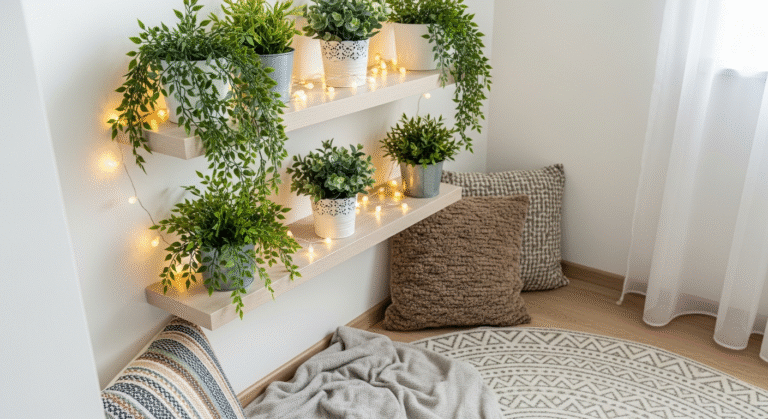
Just as you thoughtfully design your living room for relaxation or your kitchen for culinary creativity, dedicating a specific, calming space for your journaling practice can significantly enhance its effectiveness. This isn’t about needing a grand, elaborate setup; it’s about intentionality. Think of it as creating a mini-sanctuary within your home, a designated corner where your mind knows it can find peace and expression. This physical environment signals to your brain that it’s time to slow down, reflect, and connect with your inner self.
Embrace principles that promote comfort and serenity. The Danish concept of Hygge, for instance, emphasizes coziness and contentment, and it’s perfectly suited for a journaling nook. Imagine a soft, plush throw blanket draped over a comfortable armchair – perhaps a luxurious Barefoot Dreams Cozychic throw – inviting you to settle in. Warm, ambient lighting, rather than harsh overhead fluorescents, can dramatically shift the mood. A beautiful table lamp with a soft glow, or the flickering flame of a scented candle, like those from Paddywax with their subtle, calming scents of lavender or sandalwood, can create an immediate sense of calm and intimacy. Consider the visual aesthetics as well; a small plant, a piece of art that inspires tranquility, or a minimalist approach that declutters the space can all contribute to a focused and peaceful atmosphere.
Alternatively, you might lean into the Japanese aesthetic of Wabi-Sabi, which finds beauty in imperfection and simplicity. This approach encourages you to embrace natural textures, muted tones, and a less-is-more philosophy. A simple wooden desk, a comfortable cushion on the floor, or a quiet spot near a window with natural light can be equally effective. The key is to minimize distractions and create an environment that feels uniquely yours and conducive to introspection.
Beyond the physical space, selecting the right tools can elevate your experience. A high-quality journal that feels good in your hands can make all the difference. Many overthinkers find solace in the structured yet flexible pages of a Leuchtturm1917 notebook, with its numbered pages and table of contents, or the classic elegance of a Moleskine journal. The paper quality can impact your writing flow; look for paper that prevents bleed-through and offers a smooth surface. Pair your journal with a pen that glides effortlessly, reducing any friction in the writing process. Popular choices include the smooth-flowing Pilot G2 gel pens, known for their consistent ink delivery, or the precise lines of a Sakura Pigma Micron pen if you prefer finer detail. Having these elements ready and waiting in your designated spot makes the act of journaling an inviting ritual rather than a chore, encouraging consistency and deep engagement with your thoughts.
The Art of Getting Started: Overcoming Journaling Resistance
For many anxious overthinkers, the idea of journaling can paradoxically trigger more anxiety. The blank page can feel intimidating, activating a familiar internal critic that demands perfection, coherence, or profound insights. “What should I write about?” “Will it be good enough?” “What if I can’t articulate my feelings properly?” These questions are common barriers, often leading to procrastination or abandoning the practice before it even begins. It’s crucial to acknowledge this perfectionism paradox and approach journaling with a spirit of gentle curiosity rather than rigid expectation. Remember, this isn’t a performance; it’s a personal dialogue.
One of the most liberating truths about journaling is that there is absolutely no right or wrong way to do it. Your journal is a private space, free from judgment, grammar rules, or stylistic conventions. The goal isn’t to produce a literary masterpiece, but to simply get your thoughts out. If free-writing feels too unstructured, and the sheer openness of the page overwhelming, that’s perfectly normal. Many people find structured prompts, like those we’ll explore shortly, to be an excellent entry point. These prompts act as gentle guides, offering a starting point and a direction when your mind feels too cluttered to find its own. They reduce the cognitive load of deciding what to write, allowing you to focus purely on the act of expression.
Another common hurdle is the belief that you must journal for a significant amount of time or produce a certain volume of writing to reap benefits. This couldn’t be further from the truth. Consistency, even in small doses, is far more impactful than sporadic, lengthy sessions. Begin with just five or ten minutes a day. Set a timer if that helps. The goal is to establish a habit, to create a consistent touchstone in your day where you check in with yourself. Don’t worry if some days you only write a few sentences or a list of bullet points; other days, the words might flow effortlessly. Embrace this ebb and flow. The beauty of journaling lies in its adaptability. It’s a tool that meets you where you are, offering a flexible and forgiving space for self-exploration and emotional release, ultimately helping you to gently disarm your inner critic and embrace the process of self-discovery.
Prompts for Unpacking Anxious Thoughts

When anxiety takes hold, it often feels like a tangled ball of yarn, impossible to unravel. Journaling provides the dedicated space to gently pull at each thread, examine it, and understand its origins. These prompts are designed to help you identify triggers, challenge distorted thinking, and bring clarity to the swirling chaos of an anxious mind. Approach them with an open heart and a curious spirit, allowing your pen to guide you through the labyrinth of your thoughts.
- When do I feel most anxious, and what specific thoughts or situations precede that feeling?
Example: “I notice my chest tightens every Sunday evening when I think about the week ahead. My mind immediately jumps to deadlines and potential conflicts at work, even though I usually manage them fine.” - What is the worst-case scenario I’m imagining, and what is the most realistic outcome? How likely is each scenario?
Example: “Worst-case: My presentation will be a disaster, I’ll stumble over my words, and everyone will think I’m incompetent. Realistic: I’ll be nervous, but I’ve prepared well, and I’ll deliver the information clearly. Most likely, a few people will ask questions, and then we’ll move on.” - What evidence do I have to support my anxious thought? What evidence contradicts it?
Example: “My thought: ‘I’m going to fail this project.’ Evidence for: I’m feeling overwhelmed. Evidence against: I’ve successfully completed similar projects before, my team is supportive, and I have a clear plan outlined.” - If a dear friend were experiencing this exact same worry, what advice would I offer them? How can I apply that advice to myself?
Example: “I’d tell my friend to take a deep breath, break the problem into smaller steps, and remind them of their past successes. I’d encourage them to focus on what they can control. I need to do the same: breathe, make a to-do list, and trust my abilities.” - What is one small, actionable step I can take right now to address or alleviate this specific worry?
Example: “I’m worried about an upcoming doctor’s appointment. One small step I can take is to write down all my questions so I don’t forget them, and then prepare my insurance card. This makes it feel less abstract and more manageable.” - How does this anxious thought serve me? (Even negative thoughts often have a perceived ‘protective’ function.)
Example: “My anxiety about being late for appointments makes me incredibly punctual, which is good. But it also causes me immense stress hours beforehand, which isn’t healthy. I need to find a balance.” - What emotions am I truly feeling beneath the anxiety? (e.g., fear, sadness, anger, frustration, helplessness)
Example: “Beneath the anxiety about my finances, I think I’m feeling a lot of helplessness and a bit of anger that things aren’t easier right now. Acknowledging this feels more honest than just ‘anxious’.”
Prompts for Cultivating Self-Compassion and Gratitude
Overthinking often goes hand-in-hand with a harsh inner critic. We scrutinize our every move, dwelling on perceived flaws and shortcomings. Cultivating self-compassion and gratitude through journaling can be a powerful antidote, shifting your focus from what’s wrong to what’s right, both within yourself and in your life. These prompts encourage kindness towards yourself and an appreciation for the simple joys that often get overshadowed by worry, helping to reframe your internal narrative and soften your self-talk.
- Write a letter to yourself from the perspective of a wise, loving friend or mentor. What gentle advice and encouragement would they offer you regarding your current struggles?
Example: “My dearest self, I see how hard you’re working and how much you care. It’s okay to feel overwhelmed sometimes. Remember your strength and resilience. Be kind to yourself, just as you would be to anyone you love.” - List three things you are genuinely grateful for right now, no matter how small. How do these things make you feel?
Example: “1. The warmth of my morning coffee in my favorite mug – it brings a moment of quiet comfort. 2. The sunlight streaming through my window – it fills my home with light and energy. 3. A kind text from a friend – it reminds me I’m connected and cared for.” - Describe a time when you overcame a challenge or handled a difficult situation with grace and strength. What qualities did you demonstrate?
Example: “When I had to navigate that unexpected career change, I was terrified, but I researched, networked, and ultimately found a path that was even better. I showed resilience, adaptability, and courage.” - What is one aspect of yourself (personality trait, skill, physical feature) that you genuinely appreciate? Why?
Example: “I really appreciate my ability to listen deeply to others. It makes me a good friend and helps me understand different perspectives, which I value.” - Imagine your future self, happy and at peace. What message does she have for your present self about navigating this moment?
Example: “She’d tell me to trust the process, that everything works out, and that this period of growth is making me stronger. She’d remind me to breathe and enjoy the small moments.” - How can I offer myself the same compassion and understanding I would readily give to someone I deeply care about? Be specific.
Example: “Instead of criticizing myself for making a mistake, I can acknowledge the effort I put in, remind myself that everyone makes mistakes, and then gently consider what I can learn from it, without judgment.” - What simple pleasures or moments of beauty have I noticed in my home or surroundings today?
Example: “The way the light catches the dust motes dancing in the air, the scent of fresh laundry, the quiet hum of the refrigerator. These tiny moments ground me.”
Prompts for Future-Pacing and Problem Solving
Overthinking often traps us in a cycle of rumination, replaying past events or endlessly worrying about hypothetical futures without moving towards constructive action. These prompts are designed to shift your focus from passive worry to active problem-solving, helping you to break down overwhelming concerns into manageable steps. By engaging with these questions, you can transform vague anxieties into concrete plans, empowering you to move forward with clarity and purpose, rather than being paralyzed by indecision.
- If I could wave a magic wand and resolve this particular worry, what would that resolution look like? What specific actions would I have taken to get there?
Example: “If my financial worry disappeared, it would mean I had a clear budget and a savings plan in place. To get there, I would have researched budgeting apps, set realistic goals, and automated my savings.” - What are the resources (internal or external) I currently possess that could help me address this concern? (e.g., skills, support network, information, time)
Example: “Internal resources: my problem-solving skills, my determination. External resources: my partner’s advice, a trusted financial advisor, online articles about debt management.” - Break down a large, overwhelming goal or worry into three smaller, more manageable steps. What is the very first step I can take?
Example: “Worry: ‘I need to overhaul my entire home organization.’ Step 1: Declutter one small drawer in the kitchen. Step 2: Research simple storage solutions for that drawer. Step 3: Implement the solution. First step: Tackle the junk drawer.” - What is one potential obstacle to my desired outcome, and what is one strategy I can employ to overcome it?
Example: “Obstacle: Procrastination on a big project. Strategy: Break it into 15-minute sprints using the Pomodoro Technique, rewarding myself with a short break after each.” - If I were to look back on this situation a year from now, what advice would my future self give me about handling it?
Example: “Future me would say, ‘Don’t stress so much! You figured it out, just like you always do. Trust your instincts and remember to ask for help when you need it.’” - What is within my control regarding this situation, and what is outside of my control? How can I focus my energy on what I can influence?
Example: “I can control my preparation for the job interview and my attitude. I cannot control the other candidates or the hiring manager’s final decision. I’ll focus on preparing thoroughly and presenting my best self.” - What positive opportunities or lessons could potentially emerge from this challenging situation, even if it feels difficult right now?
Example: “This period of uncertainty about my career path is forcing me to really think about what I truly want and what brings me joy, which is a valuable self-discovery process.”
Beyond the Written Word: Enhancing Your Journaling Practice
While the act of writing is central to journaling, the practice can be incredibly diverse and adaptable, especially for those seeking alternative ways to express and process their thoughts. For anxious overthinkers, sometimes the pressure to articulate perfectly can be its own barrier. Exploring different methods can open new avenues for self-discovery and emotional release, transforming your journal into a multifaceted tool for well-being. Consider these enhancements to deepen and enrich your personal reflection journey.
One popular method that offers structure and creativity is Bullet Journaling, originally developed by Ryder Carroll. Far more than just a planner, a bullet journal allows you to combine to-do lists, calendars, habit trackers, and traditional journaling entries all in one customizable notebook. Its beauty lies in its flexibility: you can design spreads to track your mood, monitor anxiety triggers, or even visualize your progress on specific goals. For overthinkers, the structured yet open-ended nature of bullet journaling can be incredibly soothing, providing a sense of control and organization over both your external tasks and internal landscape, preventing the feeling of being overwhelmed by a blank page.
For those who find words elusive or overwhelming, integrating visual elements can be profoundly therapeutic. **Art journaling** involves combining writing with drawing, painting, collage, or even simple doodles. You don’t need to be an artist; the process itself is the therapy. Tearing out images from magazines that resonate with your feelings, using watercolors to express a mood, or simply scribbling abstract shapes can bypass the verbal filter of the overthinking mind, allowing raw emotions to surface and be processed in a non-linear way. This can be particularly effective for releasing pent-up feelings that are hard to put into words, offering a different kind of catharsis.
While we often champion the tactile experience of pen and paper, **digital journaling apps** like Day One or Journey offer convenience and privacy. They can be great for capturing fleeting thoughts on the go, attaching photos, or using voice notes. However, for deep emotional processing and the specific benefits of externalizing thoughts (the physical act of writing), many overthinkers still find the tangible connection with a physical journal more grounding and less prone to digital distractions. It’s about finding what resonates most with your personal style and needs.
Finally, consider integrating **mindfulness practices** directly into your journaling routine. Before you pick up your pen, take a few deep breaths. Close your eyes and notice the sensations in your body, the sounds around you, and the rhythm of your breath. This brief moment of mindful presence can help to anchor you in the present, reducing the pull of past regrets or future worries, and preparing your mind for a more focused and intentional journaling session. After writing, take another moment to simply sit with what you’ve written, without judgment, allowing any insights or feelings to settle. This holistic approach transforms journaling into a powerful ritual for self-care, helping you to not just write about your life, but to truly live it with greater awareness and peace.
Sustaining Your Practice: Making Journaling a Lifelong Habit
Starting a journaling practice is a wonderful step, but the true benefits unfold when it becomes a consistent, sustainable habit. For anxious overthinkers, consistency can be a challenge, often derailed by the very perfectionism or self-doubt that journaling aims to address. However, with a few thoughtful strategies, you can integrate journaling seamlessly into your life, transforming it from a task into a cherished ritual that supports your long-term well-being and helps maintain the tranquility of your home and mind.
Firstly, **set realistic goals and expectations**. Don’t aim for an hour of profound reflection every day if your schedule doesn’t allow it. Even five to ten minutes of focused writing can be incredibly impactful. The goal is not quantity, but consistent engagement. Think of it as a daily check-in with yourself, a brief moment to clear your mental clutter. Placing your journal and pen in your designated calming space, ready for use, reduces friction and makes the act of starting much easier. Perhaps you commit to writing three sentences before your first cup of coffee, or jotting down three gratitudes before bed. Small, consistent actions build momentum and solidify the habit.
Secondly, **embrace flexibility**. Life happens, and some days you might miss a session. Instead of letting this derail your practice with guilt or self-criticism, simply pick up where you left off the next day. Your journal is a tool for self-compassion, not another item on your to-do list to feel bad about. If structured prompts feel overwhelming one day, try free-writing whatever comes to mind, or simply list bullet points of your feelings. If writing feels impossible, try drawing or simply sitting with the journal open for a few minutes. The practice should serve you, not the other way around.
A powerful way to deepen your journaling practice is to **periodically review past entries**. This isn’t about judging your past thoughts, but about observing your journey. You might notice patterns in your anxiety triggers, track your emotional growth, or see how far you’ve come in overcoming specific challenges. This reflective process can be incredibly validating and empowering, offering tangible evidence of your resilience and progress. It helps you recognize your own strengths and provides insights into what truly helps you navigate difficult moments, reinforcing the value of your journaling efforts.
Finally, **connect journaling to your broader self-care routine**. See it as an integral part of nurturing your mind, just as exercise nurtures your body or healthy eating fuels your energy. Perhaps your journaling time is paired with a calming ritual, like sipping a cup of herbal tea, listening to soft instrumental music, or diffusing essential oils like lavender or frankincense. By intertwining journaling with other beloved self-care activities, you elevate its status in your daily life, making it a non-negotiable component of your well-being. This sustained practice will not only help you manage anxious overthinking but will also deepen your relationship with yourself, fostering a lasting sense of peace and clarity that radiates throughout your beautiful home and life.
Comparing Journaling Styles for Anxious Overthinkers
Choosing the right journaling style can significantly impact your experience, especially when dealing with anxiety and overthinking. Different methods offer varying degrees of structure and focus, allowing you to tailor your practice to your specific needs and preferences. Here’s a comparison of popular journaling styles and how they can benefit an anxious mind.
| Journaling Style | Primary Focus | Benefits for Anxious Overthinkers | Recommended Tools & Approach |
|---|---|---|---|
| Freeform Writing | Uninterrupted stream of consciousness; dumping thoughts onto the page. | Excellent for immediate emotional release, clearing mental clutter, and identifying recurring thought patterns without self-censorship. Helps externalize overwhelming thoughts. | Any notebook and pen. Set a timer (e.g., 10-15 min) and write continuously without stopping or editing. Don’t worry about grammar or coherence. |
| Prompt-Based Journaling | Responding to specific questions or statements. | Provides structure and direction, reducing the intimidation of a blank page. Helps focus on particular aspects of anxiety (e.g., triggers, solutions, self-compassion). | A journal with ample space for reflection. Use the prompts provided in this article, or find prompt collections online. Take your time with each answer. |
| Gratitude Journaling | Listing things you are grateful for. | Actively shifts focus from worry to appreciation, counteracting negative bias. Cultivates a more positive outlook and reduces rumination on perceived lacks. | A dedicated gratitude journal or a specific section in your main journal. Aim for 3-5 unique items daily. Be specific about why you’re grateful. |
| Bullet Journaling (BuJo) | Organized system for tasks, events, notes, and reflections using rapid logging. | Combats overwhelm by providing a structured way to track thoughts, tasks, and moods. The organizational aspect can be very calming for an overthinking mind. | Dotted notebook (e.g., Leuchtturm1917), a fine-point pen. Learn the basic BuJo system (index, future log, monthly/daily logs) and customize. |
| Shadow Work Journaling | Exploring repressed or unacknowledged aspects of the self (the “shadow”). | Helps anxious overthinkers confront underlying fears, insecurities, and past traumas that might be fueling current anxieties. Promotes deep self-awareness. | A private journal. Requires courage and honesty. Use specific shadow work prompts (e.g., “What qualities do I judge most in others?”). Consider doing this with guidance. |
Key Takeaways
- Journaling creates a vital distance between you and your thoughts, helping to externalize and untangle anxious rumination.
- Designing a calming, dedicated journaling space within your home enhances the practice and signals to your mind that it’s time for introspection.
- Overcome journaling resistance by starting small, embracing flexibility, and remembering there’s no “right” way to journal.
- Utilize specific prompts to unpack anxiety, cultivate self-compassion, and shift from passive worry to active problem-solving.
- Sustain your practice by setting realistic goals, reviewing past entries, and integrating journaling into your broader self-care routine for lasting peace.
Frequently Asked Questions
Q: I feel overwhelmed just thinking about starting a journal. How can I make it less intimidating?
A: Start incredibly small. Don’t aim for perfect prose or lengthy entries. Try setting a timer for just two minutes and write whatever comes to mind, even if it’s “I don’t know what to write.” Or pick just one simple prompt from this article and answer it with a few sentences. The goal is consistent, gentle engagement, not perfection. Place your journal and pen somewhere easily accessible in your home, like your bedside table or a cozy armchair, so it’s