




















How to Ferment Vegetables Safely: A Comprehensive Guide for Home Cooks
Fermentation is one of the oldest and most transformative culinary traditions in human history. In 2026, as we continue to lean into functional foods and gut-healthy diets, the art of home fermentation has evolved from a niche hobby into a staple skill for the modern kitchen. While the process of letting vegetables “sit out” might seem counterintuitive to our modern sensibilities regarding food safety, it is actually a scientifically backed method of preservation that—when done correctly—is incredibly safe. By harnessing the power of beneficial bacteria, specifically *Lactobacillus*, you can transform raw cabbage into crunchy sauerkraut, cucumbers into tangy pickles, and carrots into probiotic powerhouses. This guide will walk you through the essential safety protocols, the science of brine, and the troubleshooting tips you need to master the art of safe vegetable fermentation at home.
The Science of Lacto-Fermentation: How It Keeps You Safe
To ferment vegetables safely, it is essential to understand the biological process at work: lacto-fermentation. This process does not involve dairy; rather, it refers to *Lactobacillus*, a genus of beneficial bacteria found on the skins of all fruits and vegetables. When you place vegetables in an environment that is salty and anaerobic (oxygen-free), these bacteria begin to consume the natural sugars in the produce.
As they eat, they produce lactic acid as a byproduct. This acid is the “magic” of fermentation. It lowers the pH of the environment to a level (typically below 4.6) that is too acidic for harmful pathogens—like *E. coli*, *Salmonella*, or *Clostridium botulinum*—to survive. Essentially, you are creating a controlled environment where the “good” bacteria win the war against the “bad” bacteria. Understanding that acidity is your primary safety shield is the first step toward fermentation confidence. In 2026, we have more access than ever to pH strips and digital meters, which allow home cooks to verify that their ferments have reached the “safe zone” of acidity.
Essential Equipment and the “Clean vs. Sterile” Debate
One of the most common questions for beginners is whether they need to sterilize their kitchen like a laboratory. The short answer is no, but cleanliness is paramount. Because lacto-fermentation relies on the bacteria already present on the vegetables, you don’t want to kill everything with high-heat sterilization. However, you must ensure you aren’t introducing harmful bacteria from dirty tools.
#
What You Need:
1. **Glass Jars:** Wide-mouth Mason jars are the gold standard. Glass is non-reactive and easy to clean. Avoid metal containers, as the acid and salt can corrode the material over time.
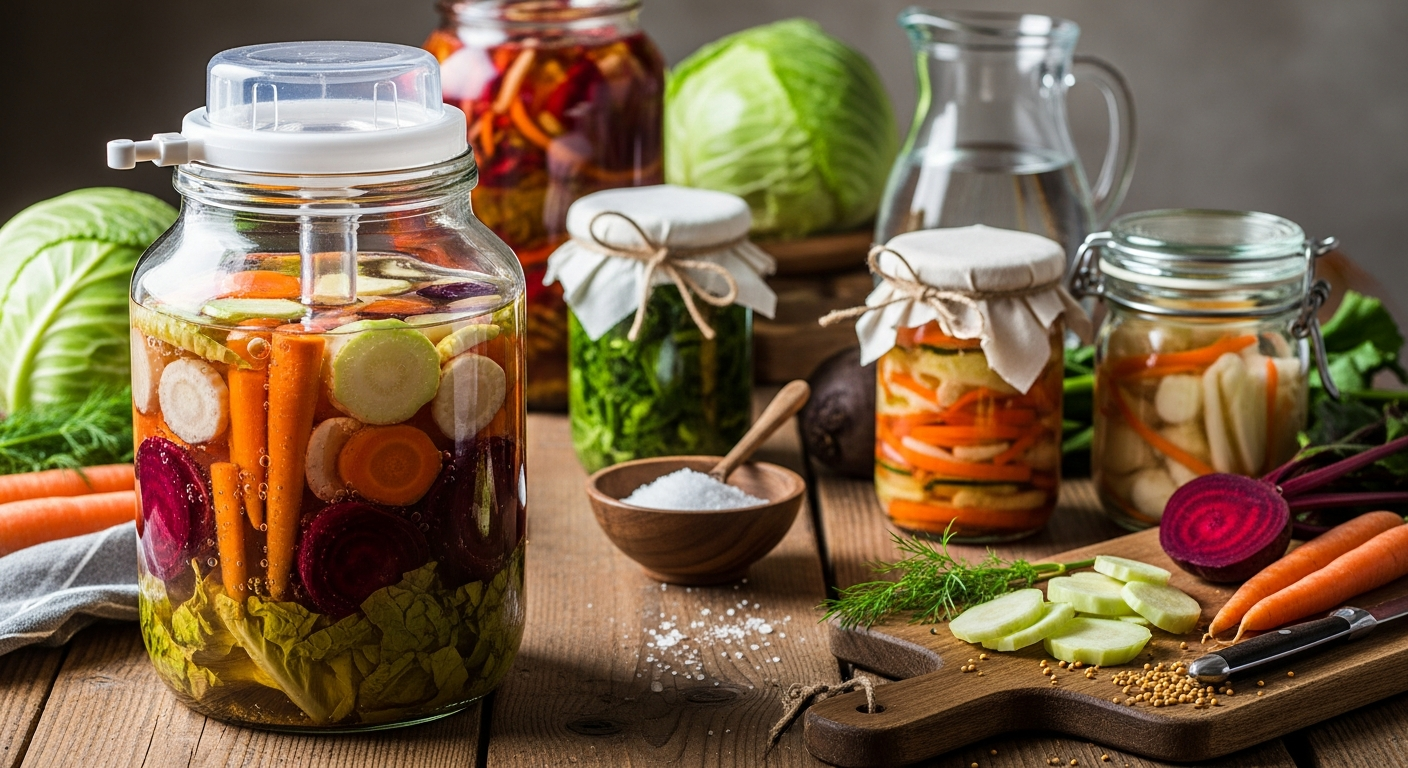
2. **Weights:** “Submergence is insurance.” If a vegetable touches the air, it can grow mold. Glass fermentation weights or even a smaller jar filled with water can keep your vegetables pinned beneath the brine.
3. **Airlocks or Burping Lids:** In 2026, silicone waterless airlocks have become the preferred choice for home cooks. These allow carbon dioxide (a byproduct of fermentation) to escape without letting oxygen (and mold spores) in.
4. **A Digital Scale:** Precision is the best way to ensure safety. Measuring salt by weight (grams) rather than volume (tablespoons) ensures a consistent brine percentage.
Before you begin, wash your jars, weights, and hands thoroughly with hot, soapy water. There is no need for bleach or chemical sanitizers; a clean environment is all the *Lactobacillus* needs to take over.
The Golden Rule of Salt: Calculating Your Brine Ratios
Salt is the most critical safety component in vegetable fermentation. It performs three vital functions: it draws moisture out of the vegetables to create a brine, it firms the pectins in the vegetables (keeping them crunchy), and most importantly, it inhibits the growth of putrefying bacteria while allowing *Lactobacillus* to thrive.
For the safest results, aim for a salt concentration of **2% to 3%** of the total weight of the vegetables and water.
#
How to Calculate:
* **Dry Salting (Sauerkraut, Kimchi):** Weigh your shredded vegetables in grams. Multiply that weight by 0.02. The resulting number is the amount of salt you should add. (e.g., 1000g of cabbage x 0.02 = 20g of salt).
* **Brining (Whole Carrots, Pickles):** Place your vegetables in the jar and fill it with water. Pour that water out into a bowl on a scale. Multiply the weight of the water by 0.02 to 0.03 to find your salt requirement. Dissolve the salt into the water to create the brine, then pour it back over the vegetables.
Using too little salt can lead to mushy vegetables and potential spoilage. Using too much salt can stall the fermentation process entirely. By sticking to the 2% rule, you create a perfect biological filter.
Choosing the Right Ingredients for Success
The quality of your ingredients directly impacts the safety and longevity of your ferment. In 2026, the focus on “farm-to-jar” has never been stronger, and for good reason.
#
Freshness Matters
Always use the freshest vegetables possible. Produce that is starting to wilt or turn soft already has a high microbial load of spoilage organisms. Fresh, crisp vegetables have a higher sugar content and a more robust population of native lactic acid bacteria.
#
Water Quality
If you are making a brine, the water you use is just as important as the salt. Most municipal tap water contains chlorine or chloramines to kill bacteria. Unfortunately, these chemicals are very good at their job and can kill the beneficial bacteria you are trying to cultivate. Use filtered water or spring water to ensure your microbial colony flourishes.
#
Salt Choice
Avoid iodized table salt. Iodine has antimicrobial properties that can interfere with fermentation. Furthermore, the anti-caking agents in table salt can make your brine cloudy and unappetizing. Stick to sea salt, Himalayan pink salt, or “pickling salt” which are pure and mineral-rich.
Troubleshooting: Is It Safe to Eat?
The fear of “bad” bacteria is the biggest hurdle for new fermenters. However, your senses are remarkably good at detecting a failed ferment. If you follow the 2% salt rule and keep your vegetables submerged, the risk of dangerous pathogens like botulism is virtually non-existent because *C. botulinum* cannot grow in high-acid environments.
#
The “Look” Test
* **White Film (Kahm Yeast):** You might see a thin, white, wavy film on the surface of the brine. This is Kahm yeast. It is harmless but can affect the flavor if left too long. Simply skim it off.
* **Mold:** If you see fuzzy growths that are green, black, or pink, the ferment has been compromised. This usually happens because the vegetables weren’t submerged. If you see fuzzy mold, the safest practice is to discard the entire batch.
* **Cloudy Brine:** This is perfectly normal! It’s a sign that the bacteria are doing their job.
#
The “Smell” Test
A safe ferment should smell sour, tangy, or like vinegar. It might have a “funky” edge, similar to cheese. However, if it smells like rotting garbage, sewage, or putrid meat, something has gone wrong. When in doubt, throw it out.
#
The “Texture” Test
Vegetables should remain somewhat firm. If they have turned into a slimy, translucent mush, it’s a sign that spoilage organisms or enzymes have broken down the cellular structure. While not always “dangerous,” it is certainly not pleasant to eat.
Storing and Maintaining Your Ferments
Once your vegetables have reached your desired level of tanginess—usually after 7 to 21 days at room temperature—you need to slow the process down.
Transfer your jars to the refrigerator. The cold temperature significantly slows the metabolic activity of the *Lactobacillus*, effectively “locking in” the flavor profile. Most fermented vegetables will stay safe and delicious in the fridge for 6 to 12 months.
Always use a clean fork when scooping vegetables out of the jar. Introducing saliva or food particles from a used utensil can introduce mold into an otherwise stable ferment. As long as the vegetables remain under the brine level in the fridge, they are protected from oxidation and spoilage.
***
FAQ: Frequently Asked Questions About Safe Fermentation
#
1. Can I ferment without salt?
While it is technically possible to ferment using a starter culture (like whey or a freeze-dried powder), it is much riskier for home cooks. Salt is your primary safety barrier against pathogens. For beginners and even advanced fermenters in 2026, using at least a 2% salt concentration is the recommended safety standard.
#
2. Is it normal for my jar to “hiss” when I open it?
Yes! The hissing is the sound of carbon dioxide escaping. This is a byproduct of active fermentation. If you aren’t using an airlock lid, you should “burp” your jars daily by slightly unscrewing the lid to release pressure, which prevents the glass from breaking.
#
3. Why did my garlic turn blue or green?
Don’t panic! This is a common chemical reaction between the sulfur in the garlic and the acid in the ferment. It is entirely safe to eat. This often happens if the garlic is slightly older or if there are trace minerals in the water.
#
4. What is the ideal temperature for fermenting vegetables?
The “sweet spot” for lacto-fermentation is between 65°F and 75°F (18°C to 24°C). If the room is too cold, fermentation will be sluggish. If it is too hot (above 80°F), the vegetables may soften too quickly, and the risk of “off” flavors or mold increases.
#
5. Can I use frozen vegetables for fermentation?
It is not recommended. The freezing and thawing process breaks down the cell walls of the vegetables, leading to a mushy texture. Additionally, freezing can kill off some of the beneficial bacteria needed to start the process. Stick to fresh, crisp produce for the best and safest results.
***
Conclusion: Embracing the Fermentation Craft
Mastering how to ferment vegetables safely is a journey of reconnecting with the microbial world. By respecting the simple rules of salinity, acidity, and oxygen exclusion, you can turn your kitchen into a hub of probiotic health. Fermentation is not just about preservation; it’s about flavor transformation—turning a simple head of cabbage into a complex, vitamin-rich superfood.
As we look toward the future of food in 2026, the move away from ultra-processed snacks and toward living, fermented foods continues to grow. Whether you are making your first jar of spicy fermented carrots or a massive crock of traditional sauerkraut, the principles remain the same. Keep it clean, keep it salty, and keep it submerged. With these safety protocols in place, you can confidently enjoy the ancient, tang-filled rewards of home fermentation.