










Mastering the Art of Gluten-Free Baking in 2026: Expert Tips for the Modern Home Cook
The landscape of gluten-free baking has undergone a radical transformation over the last decade. Gone are the days of dense, crumbly loaves that tasted more like cardboard than crust. As we move through 2026, gluten-free baking has officially entered its “Golden Age.” Thanks to advancements in food science, a wider availability of ancient grains, and a deeper understanding of dough hydration, home cooks can now produce pastries, breads, and cakes that are indistinguishable from their gluten-containing counterparts. Whether you are baking for a celiac diagnosis or simply exploring the nutritional benefits of alternative grains, the bar for quality has never been higher. Mastering gluten-free baking in 2026 isn’t just about finding a substitute; it’s about understanding the unique chemistry of alternative proteins and starches. This guide will walk you through the essential techniques, ingredient shifts, and scientific breakthroughs that define the modern gluten-free kitchen, ensuring your bakes are soft, structural, and spectacular every time.
1. The 2026 Flour Palette: Moving Beyond Basic Blends
In the past, most home cooks relied on a single “1:1” all-purpose gluten-free flour blend. While these are still useful for cookies and simple pancakes, the 2026 baker knows that different bakes require different botanical profiles. We have moved toward a more nuanced “flour palette” that prioritizes flavor and nutrition alongside texture.
To achieve professional results, you must understand the categories of gluten-free flours:
* **Protein-Rich Grains:** Sorghum, millet, and teff are the stars of 2026. Teff, an ancient grain from Ethiopia, provides a nutty depth and excellent elasticity for chocolate cakes and hearty breads. Millet offers a mild, corn-like sweetness that is perfect for yellow cakes.
* **The “New” Starches:** While cornstarch and potato starch remain staples, arrowroot and tapioca pearls (ground into fine flour) are being used more strategically to create that elusive “chew” in pizza dough and bagels.
* **Pseudo-Cereals:** Buckwheat and quinoa flour are no longer “fringe” ingredients. Buckwheat, specifically, contains no wheat (despite the name) and provides a sophisticated, earthy bitterness that balances high-sugar recipes.
The key tip for 2026 is **custom blending**. Instead of using a pre-mixed bag, try a ratio of 40% heavy grains (sorghum/millet), 30% light grains (white rice flour), and 30% starches (tapioca/potato). This balance ensures the structure is strong enough to hold air bubbles without becoming gummy.
2. Hydration and the “Resting” Revolution
One of the biggest mistakes amateur gluten-free bakers make is treating GF dough like wheat dough. In 2026, the most significant technique change is the emphasis on **increased hydration and the “long rest.”**
Gluten-free flours, particularly those high in fiber like coconut or brown rice flour, take much longer to absorb liquids than wheat flour. If you put your batter directly into the oven, the grains remain “gritty,” and the final product often feels dry.
**The 2026 Hydration Rule:**
* **The 30-Minute Rest:** After mixing your batter or dough, let it sit at room temperature for at least 30 minutes before baking. This allows the starches to fully hydrate, resulting in a smoother crumb and a more cohesive structure.
* **High-Moisture Ratios:** Gluten-free doughs should often look more like “thick batters” than traditional dough. If you are making bread, don’t be afraid if the dough is too sticky to knead by hand. In 2026, we use “scoopable” dough techniques and silicone molds to support the structure of high-hydration bakes.
* **Hydration Boosters:** Ingredients like sour cream, Greek yogurt, or fruit purées (apple sauce or pumpkin) are essential in 2026 recipes to ensure the shelf-life of your bake stays moist for days rather than hours.
3. The Science of Structure: Binders Beyond Xanthan Gum
For years, xanthan gum was the only way to replicate the “stretch” of gluten. However, in 2026, many home cooks are moving toward more natural and effective binders that provide a better mouthfeel and improved digestive comfort.
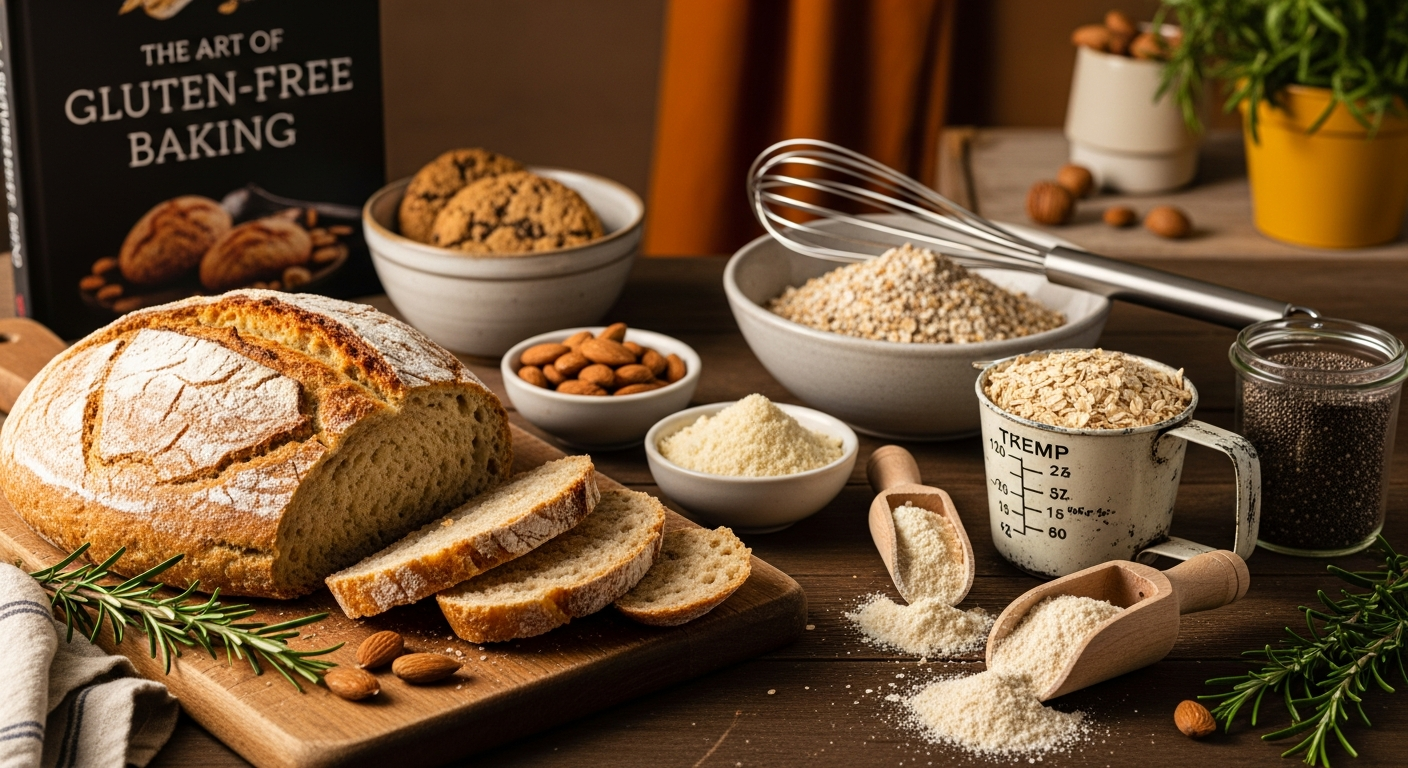
**Psyllium Husk:** This is the undisputed champion of gluten-free bread baking in 2026. Unlike xanthan gum, which can sometimes create a “slimy” or “rubbery” texture, psyllium husk creates a sturdy, gel-like matrix that allows dough to be shaped and braided. For artisan loaves, use psyllium husk powder mixed with water to create a “gel” before adding it to your dry ingredients.
**Flax and Chia “Eggs”:** Even if you aren’t vegan, using ground flaxseed or chia seeds provides a source of mucilage that helps bind cookies and muffins. They add a boost of Omega-3s and help prevent the “crumble effect” common in gluten-free treats.
**Precision Leavening:** In the absence of gluten to trap air, your leavening agents (baking powder and soda) have to work twice as hard. In 2026, expert bakers often use a combination of biological leavening (yeast) and chemical leavening (baking powder) in the same recipe to ensure maximum lift. Additionally, adding a teaspoon of apple cider vinegar to your liquids can react with the baking soda to provide an extra “boost” during the initial oven spring.
4. Essential Tools for the 2026 Gluten-Free Kitchen
You cannot master gluten-free baking with a measuring cup. The density of gluten-free flours varies wildly between brands and even between batches. If you want consistent results in 2026, your kitchen needs a few specific upgrades.
* **The Digital Scale:** This is non-negotiable. One cup of rice flour can weigh 120 grams or 160 grams depending on how tightly it’s packed. To ensure your 2026 recipes work every time, always measure in grams.
* **High-Powered Blenders:** Many enthusiasts are now buying whole grains (like raw buckwheat or groats) and milling them at home to ensure maximum freshness and zero cross-contamination.
* **Digital Thermometers:** Gluten-free bread is notorious for looking done on the outside while remaining gummy in the middle. The only way to be sure is to check the internal temperature. Most GF breads are perfectly baked when they reach an internal temp of 205°F–210°F (96°C–99°C).
* **Silicone Bakeware:** Because GF batters are stickier, traditional metal pans can lead to frustration. Silicone mats and pans allow for easy release without the need for excessive greasing, which can sometimes fry the edges of delicate GF pastries.
5. Sourdough and Fermentation: The New Frontier
In 2026, the “holy grail” of gluten-free baking is the sourdough loaf. Fermentation isn’t just for wheat anymore; it is the key to unlocking better flavor and digestibility in gluten-free grains.
Gluten-free sourdough starters are typically built using brown rice flour or sorghum flour. The fermentation process breaks down the complex starches in these grains, making the final bread easier on the gut. Moreover, the acidity produced during fermentation helps strengthen the starch gels, leading to a bread that has actual “holes” (alveoli) and a chewy crust.
**Tips for 2026 GF Sourdough:**
* **Feed with Variety:** Don’t just stick to one flour for your starter. Alternating between teff and rice flour can introduce different strains of wild yeast, leading to a more robust flavor profile.
* **Temperature Control:** Gluten-free starters are more sensitive to temperature than wheat starters. In 2026, many home cooks use fermentation crocks with built-in heaters to maintain a steady 75°F, ensuring the yeast remains active and healthy.
6. Temperature, Timing, and the “Carry-Over” Bake
The final stage of gluten-free baking is often where things go wrong. In 2026, we recognize that the baking process doesn’t end when the timer goes off.
**The “Low and Slow” Approach:** Gluten-free bakes often benefit from a slightly lower oven temperature and a longer baking time. This allows the heat to penetrate the dense center of the bake without burning the exterior.
**The Cooling Phase:** This is perhaps the most important tip for 2026. A gluten-free loaf of bread is still “cooking” as it cools. The starch molecules are setting into their final structure. If you cut into a warm gluten-free loaf, the steam will escape too quickly, and the remaining bread will turn gummy and collapse. You must wait at least two to three hours—preferably until the loaf is completely cool—before slicing.
**The “Double Bake” Technique:** For items like baguettes or pizza crusts, the 2026 trend is to “par-bake” (partially bake) the dough, let it cool, and then finish it at a high temperature or in an air fryer. This creates a crispiness that is usually only achievable with gluten.
—
FAQ: Frequently Asked Questions About 2026 GF Baking
**Q1: Can I just swap 1:1 gluten-free flour in any recipe?**
In 2026, while 1:1 blends have improved, they aren’t a universal fix. They work best in “weak” structures like cookies, muffins, and brownies. For “strong” structures like crusty bread, croissants, or pasta, you will likely need a custom blend with higher protein and a specific binder like psyllium husk.
**Q2: Why does my gluten-free bread always turn out heavy and dense?**
This is usually due to under-hydration or old leavening agents. Gluten-free flour needs significantly more water than wheat flour. Also, ensure your yeast is fresh; gluten-free dough doesn’t have the “elasticity” to wait around for slow-acting yeast to work.
**Q3: How do I stop my gluten-free cakes from being gritty?**
Grittiness is caused by rice flour particles that haven’t hydrated. The 2026 solution is the “rest method.” Let your cake batter sit for 30 minutes before putting it in the oven. Additionally, look for “super-fine” or “stone-ground” flours, which have a smaller particle size.
**Q4: Is xanthan gum bad for you?**
It is not inherently “bad,” but some people find it causes digestive upset. In 2026, many bakers are switching to psyllium husk, flax meal, or chia seeds as natural alternatives that provide better fiber and a more natural texture.
**Q5: How should I store gluten-free bakes so they don’t go stale?**
Because they lack gluten, these bakes lose moisture quickly. In 2026, the best practice is to slice bread once cooled and freeze it immediately. For cookies and cakes, airtight glass containers are better than plastic. Adding a slice of (gluten-free) bread to a cookie jar can also help maintain humidity levels.
—
Conclusion
Gluten-free baking in 2026 is no longer about compromise; it’s about celebration. By embracing the unique properties of ancient grains, mastering the science of hydration, and utilizing precision tools like digital scales and thermometers, the modern home cook can produce world-class baked goods. The shift from “replacement” to “innovation” has allowed us to discover textures and flavors that wheat simply cannot provide.
As you continue your baking journey this year, remember that patience is your most valuable ingredient. Allow your doughs to rest, your loaves to cool, and your curiosity to lead you toward new flour blends. Whether you’re pulling a crusty sourdough boule from the oven or serving a velvet-crumbed millet cake, you are participating in a culinary revolution that makes delicious food accessible to everyone. Happy baking!