











Master the Culinary Workspace: 10 Expert Tips for Organized Kitchen Cabinets in 2026
For any home cook or dedicated food enthusiast, the kitchen is more than just a room—it is a laboratory, a sanctuary, and the heart of the home. However, even the most talented chef can be stifled by a cluttered environment. When you are in the middle of a complex reduction or trying to time a perfect soufflé, the last thing you need is a search mission for a misplaced whisk or a hidden jar of cumin. As we move into 2026, the trend in kitchen design has shifted from mere aesthetics to high-level functional efficiency. Organized kitchen cabinets are no longer a luxury; they are a fundamental requirement for a seamless culinary experience. By streamlining your storage, you don’t just save space—you save time, reduce food waste, and rediscover the joy of cooking. This guide explores professional-grade strategies to transform your chaotic cupboards into a streamlined system that works for you, ensuring every tool and ingredient is exactly where it needs to be.
1. The Great Cabinet Audit: Starting with a Blank Slate
Before you can implement a new organizational system, you must confront the current state of your cabinets. Professional organizers and chefs alike agree that you cannot organize clutter; you can only manage what you actually use. Start by completely emptying every single cabinet and drawer. This “blank slate” approach allows you to see the true potential of your space and assess the condition of your cabinetry.
As you look at the piles on your counters, categorize items into three groups: “Daily Essentials,” “Occasional Use,” and “Remove.” In 2026, the movement toward sustainable kitchen management suggests that we should be more mindful of our footprints. Donate high-quality tools you no longer use, recycle worn-out plastics, and sharpen the knives you’ve neglected. For food enthusiasts, this is also the time to check expiration dates on spices and dry goods. If that tin of smoked paprika has lost its vibrant aroma, it’s time for it to go. By narrowing your inventory down to what truly serves your culinary goals, you create a foundation for a high-functioning kitchen that feels light and intentional.
2. Implementing the “Zoning” Strategy for Culinary Flow
The most efficient professional kitchens are organized by “zones,” and your home kitchen should be no different. Instead of storing items wherever they happen to fit, assign a specific purpose to every cabinet based on its proximity to your workstations. This minimizes unnecessary movement across the kitchen floor, keeping your focus on the food.
* **The Prep Zone:** This should be located near your primary counter space. Store your cutting boards, mixing bowls, food processor attachments, and measuring tools here.
* **The Cooking Zone:** Positioned directly around the stove and oven, this zone should house your pots, pans, lids, and frequently used oils or seasonings.
* **The Baking Zone:** If you are an avid baker, dedicate a cabinet to flours, sugars, leavening agents, and rolling pins. Keeping these together prevents “flour trails” across the kitchen.
* **The Cleaning Zone:** Usually located under the sink, this area should be strictly for dish soaps, sponges, and cleaning supplies.
By grouping items by activity rather than by size or color, you create an intuitive flow. When you begin a recipe, you won’t be darting back and forth; everything required for that specific stage of the process will be within arm’s reach.
3. Maximizing Vertical Space and Deep Cabinet Reach
One of the biggest frustrations for home cooks is the “cabinet abyss”—the dark back corners of deep shelves where Tupperware lids and spice jars go to be forgotten. To combat this in 2026, we utilize smart hardware and vertical stacking solutions.
For deep lower cabinets, consider installing pull-out drawers or “rolling shelves.” These allow you to bring the back of the cabinet to you, making everything visible and accessible. If a full renovation isn’t in the budget, heavy-duty “Lazy Susans” (turntables) are an excellent alternative for corner cabinets or deep shelves. They are perfect for oils, vinegars, or condiments that tend to get lost.
Vertical space is often the most underutilized asset in a kitchen. Use “shelf risers” to create an extra level within a single shelf. This is ideal for stacking plates of different sizes or keeping mugs from being piled precariously. For baking sheets, cooling racks, and cutting boards, use vertical dividers. Storing these items upright like books in a library, rather than stacked horizontally, allows you to pull one out without disturbing the entire pile. This simple change can significantly reduce the “clatter” and frustration of a busy kitchen.
4. The Art of Decanting: Visibility and Freshness
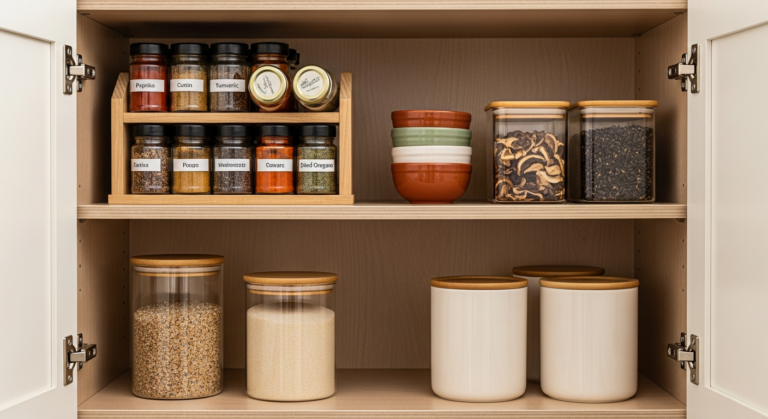
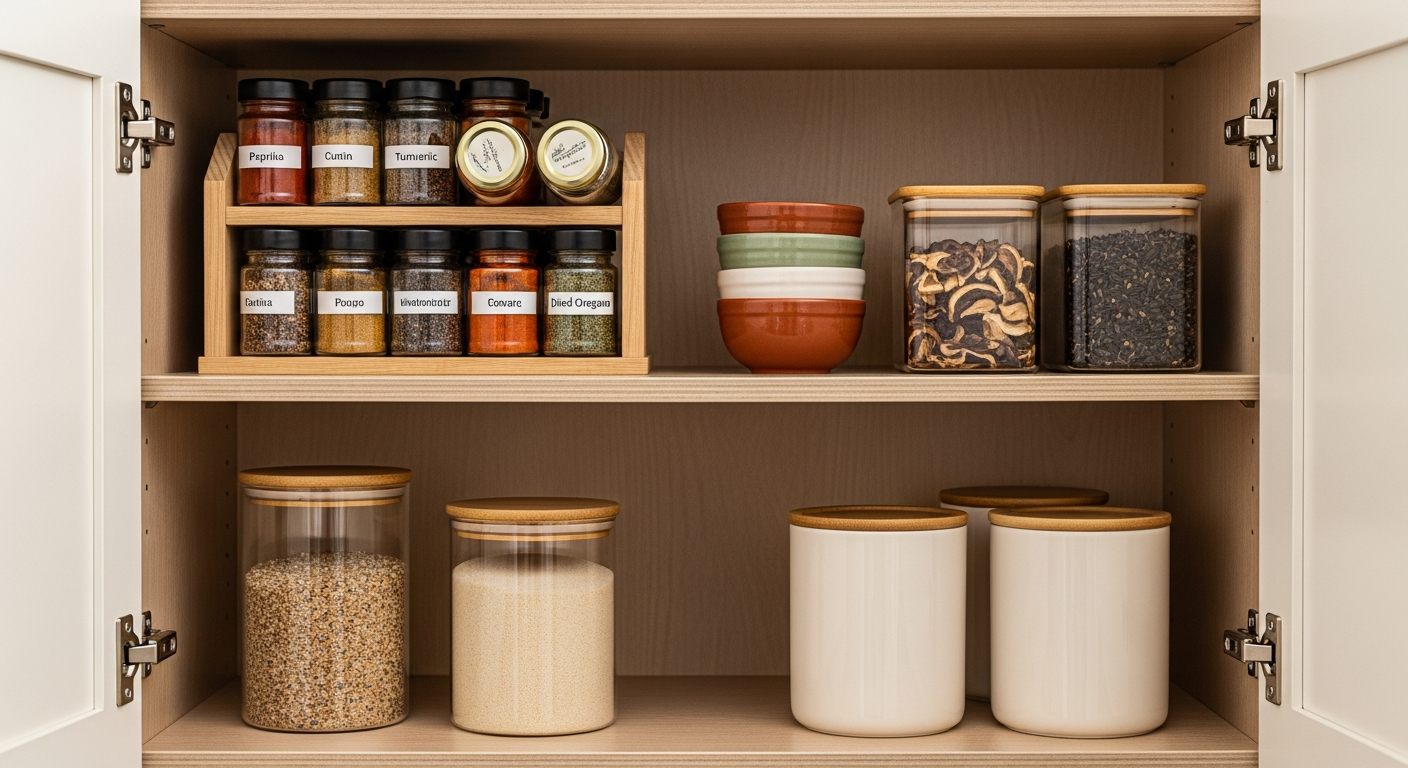
For food enthusiasts who take pride in their ingredients, decanting is a game-changer. Moving dry goods from their original, mismatched packaging into uniform, clear containers is not just about the “Pinterest-perfect” look; it’s about inventory management and food preservation.
Clear glass or high-quality BPA-free airtight containers allow you to see exactly how much flour, pasta, or quinoa you have left at a single glance. This prevents the common mistake of buying a duplicate item because you couldn’t see the half-empty box hidden in the back. Furthermore, airtight seals extend the shelf life of your ingredients, keeping them fresh and free from pantry pests.
In 2026, we are seeing a rise in “smart labeling.” Beyond just the name of the ingredient, use labels to note the “use-by” date or even the cooking instructions (e.g., “Rice: 2 parts water, 1 part grain”). For a professional touch, use a consistent font or aesthetic that matches your kitchen’s personality. When your cabinets look orderly, it fosters a sense of calm that translates directly into your cooking style.
5. Specialized Storage for the Enthusiast’s Tools
Every serious cook has specialized tools—be it a sous-vide immersion circulator, a high-end mandoline, or a collection of cast-iron skillets. These items require specific storage solutions to prevent damage and ensure safety.
* **Knife Management:** Never store high-quality knives loose in a drawer; this dulls the blades and is a safety hazard. Use a magnetic wall strip or an in-drawer knife block to keep edges sharp and fingers safe.
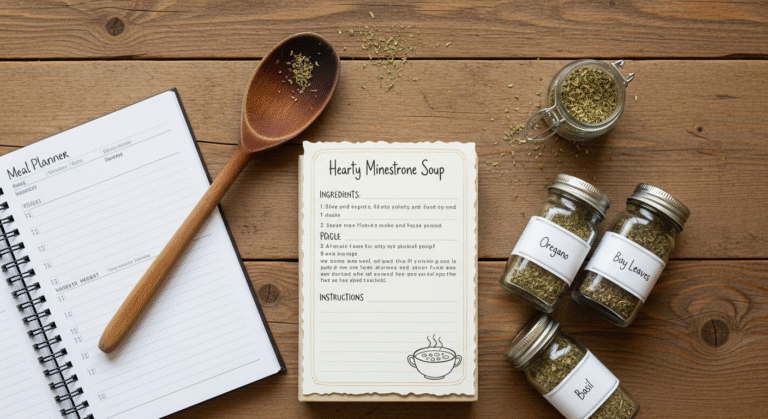
* **Spice Solutions:** Spices are the lifeblood of flavor, yet they are often the most disorganized part of a kitchen. Avoid the “box of random jars” by using a tiered spice rack or a dedicated spice drawer. Keep them away from the heat of the stove, as high temperatures degrade the essential oils that provide flavor.
* **Small Appliances:** For items used weekly (like a blender), keep them on the counter or in an “appliance garage.” For items used monthly (like a pasta maker), store them in higher, less accessible cabinets.
By treating your tools with respect and giving them “homes,” you ensure they last longer and are always ready for your next culinary project.
6. Maintaining the System: The One-In, One-Out Rule
An organized kitchen is not a one-time project; it is a lifestyle. The most common reason kitchen cabinets return to chaos is a lack of maintenance. To keep your kitchen at peak performance throughout 2026 and beyond, implement a few simple habits.
First, adopt the “one-in, one-out” rule. If you buy a new specialty Dutch oven, consider if an older, less-used pot can be retired. This prevents the gradual “clutter creep” that overtakes even the largest kitchens. Second, perform a “mini-reset” once a month. Spend ten minutes straightening the rows of cans, wiping down shelves, and checking for any items that have migrated to the wrong zone.
Finally, involve everyone in the household. A system only works if everyone knows where the coffee mugs and the cereal bowls go. Clear labeling helps tremendously here, acting as a visual guide for family members who might not be as invested in the organizational logic as the primary cook. When maintenance becomes a habit, the kitchen remains a place of inspiration rather than a source of stress.
FAQ: Frequently Asked Questions
**Q: How can I organize deep corner cabinets that don’t have a built-in Lazy Susan?**
A: Deep corner cabinets, often called “blind corners,” can be tricky. The best solution is to use “pull-out blind corner organizers,” which are hardware inserts that glide out and swing to the side. If that’s not an option, use large, clear bins that you can pull out like drawers to access the items in the back. Store lightweight, bulky items there, like extra paper towels or large mixing bowls you only use once a year.
**Q: Is decanting everything really worth the time and effort?**
A: For “core” ingredients like flour, sugar, rice, and pasta, yes. It saves space because square containers fit together more tightly than odd-shaped bags. It also protects your investment by keeping ingredients fresh. However, don’t feel pressured to decant *everything*. Items with high turnover or those that come in resealable, sturdy packaging can stay as they are.
**Q: How do I organize a small kitchen with very few cabinets?**
A: In a small kitchen, you must think vertically. Use the tops of your cabinets for beautiful, rarely-used items like ceramic platters. Install a pegboard on an empty wall (the Julia Child method) to hang pots and pans. Use “over-the-door” organizers for spices or cleaning supplies to free up internal shelf space.
**Q: Where is the best place to store heavy cast-iron cookware?**
A: Heavy items should always be stored in lower cabinets to prevent injury and strain. Use a heavy-duty pull-out drawer or a specialized “pot rack” that sits inside the cabinet to keep them separated. Stacking cast iron directly on top of each other can lead to scratching the seasoning, so place a paper towel or a felt protector between them.
**Q: How often should I deep-clean my kitchen cabinets?**
A: A full “empty and scrub” deep clean should happen twice a year. However, you should wipe down frequently touched areas (like the handles and the shelf where you store oils) once a week. In 2026, the trend is toward using natural, non-toxic cleaners like vinegar and lemon to ensure food-safe surfaces.
Conclusion: The Joy of a High-Performance Kitchen
Organizing your kitchen cabinets is an investment in your culinary future. By taking the time to audit your belongings, zone your space, and utilize smart storage tools, you transform the kitchen from a cluttered workspace into a high-performance environment that fuels your creativity. A well-organized cabinet doesn’t just look good on a screen; it feels good in practice. It allows the home cook to move with confidence, knowing that every tool is sharp, every ingredient is fresh, and every task is supported by the layout of the room.
As we navigate through 2026, the emphasis remains on making our homes work harder for us. A streamlined kitchen reduces the mental load of meal prep and makes cleaning up a breeze. Whether you are a weekend baker or a daily gourmet, these organizational strategies will provide the structure you need to excel. Clear the clutter, find your flow, and get back to what matters most: the art and joy of cooking.