



















Thriving Greenery: Your Ultimate Guide to Houseplants for Low-Light North-Facing Apartments
Well, dear friend, it’s time to banish those doubts! Your north-facing apartment isn’t a limitation; it’s an opportunity to discover a whole world of resilient, stunning houseplants perfectly adapted to its unique light conditions. Imagine waking up to the gentle unfurling of a new leaf on a Peace Lily, or unwinding in an armchair beside a stately ZZ plant, its dark green foliage reflecting the soft afternoon light. This isn’t just wishful thinking; it’s entirely achievable. This comprehensive guide is crafted just for you, designed to empower you with the knowledge and confidence to transform your low-light space into a vibrant, living haven. Get ready to embrace the joy of plant parenting, even in the gentlest of lights!
Understanding Your North-Facing Apartment’s Light Profile
Before we dive into the wonderful world of low-light plants, let’s truly understand what a “north-facing apartment” means for your green companions. Unlike south-facing windows that bask in direct, intense sunlight for much of the day, or east and west-facing windows that offer a few hours of direct morning or afternoon sun, north-facing windows provide a consistently soft, indirect, and often cooler light throughout the day. This isn’t a bad thing; it’s simply a different kind of light, and many plants absolutely adore it.
Think of it as ambient light, perfect for plants that naturally grow on forest floors, shielded by canopies, or those that prefer filtered light. You won’t get harsh sunbeams, but rather a gentle, diffused glow that remains relatively consistent. This consistency can be a huge advantage, preventing the scorching and rapid drying that can plague plants in direct sun. Assessing your light involves more than just knowing which direction your window faces. Consider any obstructions outside, like neighboring buildings or trees, and inside, such as heavy curtains or furniture that might block light. Even the color of your walls can play a role; lighter walls can reflect more available light, subtly brightening the space.
To truly gauge your light, try the “hand test.” Hold your hand about a foot away from the window, and observe the shadow it casts. If the shadow is sharp and well-defined, you have bright indirect light. If it’s blurry and faint, you have medium to low indirect light. If there’s barely a shadow, you’re in a truly low-light situation. Most north-facing windows will fall into the bright to medium indirect light category, which is fantastic for a wide array of plants. Understanding this specific light profile is the first crucial step to selecting plants that will not just survive, but truly flourish in your beautiful home.
The Unsung Heroes: Top Houseplants That Thrive in Low Light
Now for the exciting part! Let’s introduce you to the resilient, beautiful plants that are practically begging to call your north-facing apartment home. These are the champions of low light, ready to bring life and vibrancy without demanding constant sunshine.
-
Snake Plant (Sansevieria trifasciata)
Often called “Mother-in-Law’s Tongue,” the Snake Plant is the epitome of low-maintenance elegance. With its striking, upright, sword-like leaves, often variegated with shades of green, yellow, and silver, it adds architectural interest to any room. It tolerates incredibly low light and infrequent watering, making it perfect for beginners or busy individuals. Place it in a minimalist ceramic pot for a modern look, or a textured terracotta for a more bohemian vibe. Brands like The Sill offer beautiful, healthy specimens, often paired with stylish planters.
-
ZZ Plant (Zamioculcas zamiifolia)
The ZZ Plant is another superstar for the truly low-light corners. Its thick, waxy, dark green leaves store water, allowing it to go for weeks without a drink. It’s virtually indestructible and its glossy foliage adds a sophisticated touch. The ‘Raven’ variety, with its almost black leaves, offers a dramatic flair. A simple, clean-lined pot from a brand like West Elm complements its sleek aesthetic perfectly. It thrives on neglect, making it ideal for those who travel or simply forget to water.
-
Pothos (Epipremnum aureum)
Pothos, often called “Devil’s Ivy,” is incredibly versatile and forgiving. Its trailing vines, adorned with heart-shaped leaves that can be solid green, variegated with yellow (‘Golden Pothos’), or white (‘Marble Queen’), make it perfect for hanging baskets, high shelves, or allowing it to cascade down furniture. It adapts to a wide range of light conditions, including quite low light, though its variegation might become less pronounced. Consider placing it in a macrame hanger from a brand like Pottery Barn for a cozy, textural element.
-
Peace Lily (Spathiphyllum)
For those who love the elegance of flowers, the Peace Lily is a dream come true. With its lush, dark green foliage and graceful white “flowers” (which are actually modified leaves called spathes), it brings a touch of serenity to any space. It prefers consistent moisture and will dramatically droop when thirsty, offering a clear signal it needs a drink. Keep it away from drafts and direct cold air. Its elegant form looks stunning in a classic white ceramic planter, perhaps from a local artisan.
-
Chinese Evergreen (Aglaonema)
The Chinese Evergreen is a vibrant and diverse plant, offering a stunning array of foliage colors and patterns, from deep greens to reds, pinks, and silvers. It’s incredibly tolerant of low light and adds a pop of color to dimmer areas. The ‘Red Aglaonema’ or ‘Silver Bay’ are particularly striking. It’s a fantastic choice for adding visual interest without needing bright light. Place it in a decorative pot that complements its colorful leaves, maybe a muted tone to let the foliage shine.
-
Cast Iron Plant (Aspidistra elatior)
As its name suggests, the Cast Iron Plant is incredibly tough and resilient. It can withstand deep shade, neglect, and a wide range of temperatures, making it one of the most forgiving plants available. Its long, dark green leaves create a striking, architectural presence. While slow-growing, it’s a commitment to enduring beauty in the lowest light corners. It looks majestic in a large, simple floor planter, adding a touch of understated grandeur.
-
Spider Plant (Chlorophytum comosum)
Known for its distinctive arching leaves and “spiderettes” that dangle from the mother plant, the Spider Plant is not only charming but also an excellent air purifier. While it appreciates brighter indirect light, it can tolerate lower light conditions, though it might produce fewer spiderettes. It’s perfect for hanging baskets and is incredibly easy to propagate, allowing you to share its beauty with friends. A simple, rustic hanging basket or a clean white pot enhances its natural grace.
Choosing from these incredible plants means you’re already setting yourself up for success. Each offers unique beauty and an impressive ability to thrive where other plants might falter. Consider which plant’s aesthetic best complements your home’s existing decor and your personal style.
Beyond the Basics: Essential Care Tips for Low-Light Dwellers
While these plants are incredibly forgiving, a little understanding of their specific needs in a low-light environment will ensure they don’t just survive, but truly flourish. Think of it as tailoring their care to their unique situation.
Watering: Less is Definitely More
This is perhaps the most critical difference for low-light plants. With less light, plants photosynthesize less, meaning they use less water. Overwatering is the number one killer of indoor plants, especially in low-light conditions where the soil takes longer to dry out. Always check the soil moisture before watering. Stick your finger about two inches into the soil. If it feels damp, wait. If it’s dry, it’s time for a drink. For most low-light plants, allowing the top two to three inches of soil to dry out completely between waterings is a good rule of thumb. Plants like ZZ and Snake Plants can tolerate even longer dry spells. Invest in a moisture meter for added precision, like those available from brands such as XLUX or Sustee, especially if you’re new to plant care.
Humidity: Mimicking Their Natural Habitat
Many popular houseplants originate from tropical climates, where humidity is naturally high. Our indoor environments, especially with heating and air conditioning, can be quite dry. While most low-light plants are quite adaptable, providing some humidity can prevent crispy leaf tips and promote healthier growth. You can:
- Group plants together: They release moisture into the air, creating a microclimate.
- Use a pebble tray: Fill a tray with pebbles and water, ensuring the pot sits above the waterline.
- Mist occasionally: While not a long-term solution for humidity, a gentle mist with a fine mister (like those from Haws or dedicated plant misters) can temporarily refresh foliage.
- Invest in a humidifier: For a larger collection or particularly dry homes, a small room humidifier (e.g., from Levoit or Honeywell) can make a significant difference.
Fertilizing: A Gentle Approach
Because low-light plants grow slower, they require less fertilizer than their sun-loving counterparts. Over-fertilizing can lead to nutrient burn and harm your plant. During their active growing season (typically spring and summer), fertilize once every 2-4 months at half the recommended strength. During fall and winter, when growth naturally slows, refrain from fertilizing altogether. Look for balanced liquid fertilizers, like those from Espoma or SuperThrive, formulated for houseplants.
Pest Control: Vigilance is Key
Stressed plants, including those struggling with improper light or watering, can be more susceptible to pests. Regularly inspect your plants for common culprits like spider mites, mealybugs, and fungus gnats. A quick wipe-down of leaves with a damp cloth not only keeps them clean and able to photosynthesize better but also helps you spot pests early. For minor infestations, a neem oil spray (e.g., from Bonide) or insecticidal soap can be very effective.
Cleaning Leaves: Let Them Breathe
Dust can accumulate on plant leaves, blocking light absorption and hindering photosynthesis. Gently wipe down the leaves of your plants with a soft, damp cloth every few weeks. This not only keeps them looking vibrant but also ensures they can efficiently utilize the limited light available.
Repotting: When and How
Low-light plants tend to grow slower, so they won’t need repotting as frequently as fast-growing plants. Typically, every 1-2 years is sufficient, or when you notice roots growing out of the drainage holes, or the plant becoming root-bound and drying out too quickly. When repotting, choose a pot that is only one size larger (e.g., from a 6-inch to an 8-inch pot) to avoid excess soil that can retain too much moisture. Always use a good quality potting mix with excellent drainage, such as those from FoxFarm Ocean Forest or Miracle-Gro Indoor Potting Mix.
By following these tailored care tips, you’ll create an environment where your low-light tolerant plants can truly thrive, bringing endless joy and beauty to your home.
Styling Your Sanctuary: Integrating Plants into Your Home Decor
Bringing plants into your north-facing apartment isn’t just about survival; it’s about elevating your home’s aesthetic and creating a truly inviting atmosphere. Integrating greenery thoughtfully can transform a room, adding texture, color, and a sense of calm. This is where your inner interior designer gets to shine!
Choosing the Right Pots: Form Meets Function
The pot is as much a part of the decor as the plant itself. Consider material, color, and size:
- Terracotta: Excellent for drainage and allowing roots to breathe, terracotta pots bring an earthy, rustic charm. They’re perfect for plants that prefer drier soil.
- Ceramic: Offering a vast array of colors, glazes, and patterns, ceramic pots can be a statement piece. Ensure they have drainage holes, or use a plastic nursery pot inside a decorative cachepot. Brands like CB2 or Anthropologie offer unique ceramic designs.
- Self-watering pots: A fantastic option for busy individuals, these pots have a reservoir that provides water as the plant needs it, reducing watering frequency.
- Concrete/Stone: For a modern, industrial, or minimalist look, concrete or stone planters add a robust, architectural element.
- Basket Planters: Woven baskets from natural materials like seagrass or rattan add warmth, texture, and a bohemian touch. Always use a waterproof liner or a nursery pot inside to protect the basket from moisture.
Match the pot’s style to your home’s decor – a sleek white ceramic for Scandinavian, a patterned terra cotta for eclectic, or a woven basket for boho chic.
Creating Vignettes and Groupings
Don’t just place a single plant in a corner. Create dynamic groupings or “vignettes” to draw the eye and make a bigger impact. Combine plants of different heights, leaf shapes, and textures. For example, a tall Snake Plant can be flanked by a trailing Pothos on a stand and a compact Peace Lily. This creates depth and visual interest. Remember the rule of odd numbers – groups of three or five often look most pleasing.
Using Plant Stands, Shelves, and Hanging Planters
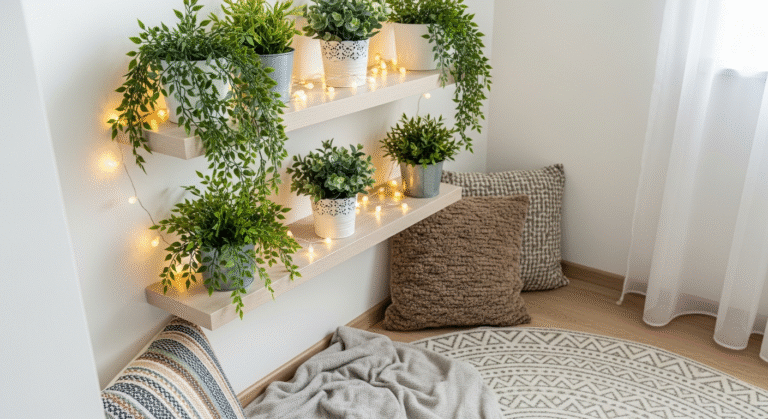
Maximize your vertical space! Plant stands (like those from Ferm Living or Target’s Threshold line) elevate plants, bringing them closer to the window’s light and making them more prominent. Floating shelves can turn a bare wall into a living display. Hanging planters are perfect for trailing plants like Pothos or Spider Plants, freeing up floor space and adding a lush, cascading effect. Look for macrame hangers or sleek metal designs to match your style.
Incorporating Biophilic Design Principles
Biophilic design is all about connecting humans with nature within built environments. By bringing plants into your home, you’re already embracing this principle. Think about how plants can enhance well-being:
- Visual Connection: Place plants where you’ll see them often – near your favorite reading nook, on your desk, or by the dining table.
- Non-Rhythmic Sensory Stimuli: The gentle sway of leaves, the subtle variations in foliage, and the organic shapes provide a calming visual experience.
- Presence of Water: While not directly from plants, a small tabletop fountain near your plant display can enhance the natural feel.
Considering Scale and Texture
Pay attention to the size of your plants relative to the room and furniture. A large Cast Iron Plant can anchor a corner, while smaller Chinese Evergreens can add pops of color to a bookshelf. Mix leaf textures – the glossy leaves of a ZZ Plant contrast beautifully with the delicate fronds of a Boston Fern (if your light allows for a slightly brighter spot) or the textured leaves of a Chinese Evergreen. This layering creates richness and depth.
By treating your houseplants as integral elements of your interior design, you’ll create a cohesive, beautiful, and naturally vibrant sanctuary in your north-facing apartment. It’s about more than just placing a pot; it’s about crafting an experience.
Troubleshooting Common Low-Light Plant Problems
Even with the most resilient plants and the best intentions, plant parenthood sometimes comes with a few bumps in the road. Don’t be discouraged if your plant shows signs of distress; understanding the common issues in low-light environments is the first step to becoming a plant whisperer. Often, these issues stem from overwatering or insufficient light, even for low-light lovers.
Yellowing Leaves
- Cause: The most common culprit for yellowing leaves, especially older ones, is overwatering. Excess moisture suffocates roots, leading to rot and an inability to absorb nutrients. Nutrient deficiency can also be a cause, but less common in low-light plants that are fertilized sparingly.
- Solution: Check soil moisture thoroughly before watering. Allow the top few inches to dry out. If the soil is consistently wet, consider repotting into fresh, well-draining soil and a pot with better drainage. Ensure your pot isn’t sitting in standing water.
Stunted Growth or Lack of New Growth
- Cause: While low-light plants naturally grow slower, a complete halt in growth often indicates insufficient light, even for them. It can also be a sign of inadequate nutrients or a plant that is root-bound.
- Solution: Try moving the plant closer to the north-facing window, ensuring no curtains or furniture block the light. If the plant hasn’t been repotted in a while, check if it’s root-bound. During the growing season, a dilute feed might help if it’s not already on a schedule.
Leggy Growth (Long Stems, Sparse Leaves)
- Cause: This is a clear sign your plant is “stretching” for more light. The stems become elongated with widely spaced leaves as the plant desperately tries to reach a brighter source.
- Solution: Relocate the plant to the brightest spot within your north-facing window range. Pruning back the leggy growth can encourage bushier new growth, and you can often propagate the cuttings (especially Pothos or Spider Plants) to create new plants.
Drooping Leaves
- Cause: Drooping can be tricky as it can signal both under-watering and overwatering. If the leaves feel crispy and dry, it’s likely underwatering. If they feel soft and mushy, it’s typically overwatering and potential root rot. Peace Lilies are famous for dramatically drooping when thirsty and perking up quickly after a drink.
- Solution: Assess the soil moisture. If dry, water thoroughly. If wet, let it dry out completely before the next watering. If root rot is suspected (mushy stems, foul odor), you may need to repot and trim away any rotten roots.
Pests Specific to Stressed Plants
- Cause: Plants under stress (from improper watering, light, or nutrients) are more vulnerable to common houseplant pests like spider mites, mealybugs, and fungus gnats. Fungus gnats are particularly common in consistently wet soil.
- Solution: Regularly inspect your plants. For fungus gnats, allow the soil to dry out more between waterings and consider using sticky traps. For other pests, isolate the affected plant and treat with insecticidal soap or neem oil (like Bonide Neem Oil). Consistent care is the best preventative measure.
Remember, every plant is a living being and will communicate its needs. Learning to read these signals is part of the rewarding journey of plant parenting. A little observation and timely intervention can often turn a struggling plant into a thriving one.
Elevating Your Plant Game: Advanced Tips and Considerations
Once you’ve mastered the basics and your low-light plants are flourishing, you might find yourself ready to delve a little deeper into the world of indoor gardening. Here are some advanced tips and considerations to truly elevate your plant game and enhance your home’s living environment.
Supplemental Lighting: A Little Boost Goes a Long Way
While our chosen plants are low-light tolerant, even they appreciate a little extra boost, especially during darker winter months or if your north-facing window is particularly dim. You don’t need elaborate, industrial-looking grow lights. Many stylish, compact LED grow lights are available that blend seamlessly with home decor. Consider a small, full-spectrum LED grow bulb (like those from Soltech Solutions or Sansi) that can be screwed into a regular lamp fixture, or a discreet clip-on light. Position it a foot or two above your plants for 8-12 hours a day. This can encourage bushier growth, more vibrant variegation, and even occasional blooms on plants like Peace Lilies.
Air Purification Benefits: Breathe Easier
Did you know your plants are working hard behind the scenes to clean your air? Many common houseplants, including those on our low-light list like the Snake Plant, Pothos, and Peace Lily, are known to filter out common indoor air pollutants such such as formaldehyde, benzene, and trichloroethylene. This biophilic benefit contributes to a healthier, more refreshing home environment. While you’d need a significant number of plants to rival an air purifier, every plant contributes to a fresher atmosphere and a deeper connection to nature.
Pet Safety: Protecting Your Furry Friends
For those with beloved pets, plant safety is a crucial consideration. While many plants are harmless, some common houseplants can be toxic if ingested. Always research a plant’s toxicity before bringing it home. For instance:
- Toxic: Peace Lilies, Pothos, and Chinese Evergreens are considered toxic to cats and dogs if ingested, potentially causing oral irritation, vomiting, or difficulty swallowing.
- Non-toxic: Snake Plants (though listed as mildly toxic by some, usually only causes mild irritation), ZZ Plants (also mildly toxic, but rarely ingested), and Spider Plants are generally considered safer, though any plant matter can cause mild stomach upset if consumed in large quantities.
If you have curious pets, consider placing toxic plants out of reach on high shelves, in hanging planters, or in rooms inaccessible to them. Brands like FTD or Bloomscape often provide pet-safety information for their plants, which is a helpful resource.
Propagating Your Plants: Share the Love
One of the most rewarding aspects of plant parenting is propagation – creating new plants from your existing ones! Many low-light plants are incredibly easy to propagate:
- Pothos: Simply snip a vine below a node (where a leaf attaches) and place it in water or moist soil.
- Snake Plant: Cut a leaf into sections, let them callus for a few days, then place the bottom end in well-draining soil.
- Spider Plant: Detach the “spiderettes” (baby plants) and plant them directly into soil or root them in water.
- ZZ Plant: Leaf cuttings can be rooted, though it takes a long time. Rhizome division during repotting is faster.
Propagating is a fantastic way to expand your collection for free, fill more corners of your home with greenery, or share the joy of plants with friends and family. It’s a wonderful way to connect more deeply with your plants and observe their incredible resilience.
The Joy of Plant Parenting: Mental Wellness Benefits
Beyond aesthetics and air purification, the act of tending to plants offers profound mental wellness benefits. It provides a sense of purpose, reduces stress, and fosters mindfulness. The simple ritual of watering, observing new growth, or wiping down leaves can be a meditative practice, a quiet moment of connection in a busy world. Plants bring a living energy into your home, creating a calm, restorative environment that nurtures your soul as much as you nurture them.
Embracing these advanced tips will not only ensure your plants thrive but will also deepen your appreciation for the natural world and its ability to enhance our daily lives within the comfort of our homes.
Choosing the Perfect Potting Mix and Accessories
The right tools and a quality foundation are just as important as the plant itself. Think of it as preparing a gourmet meal; even the best ingredients need the right pantry and utensils. For your low-light plants, this means selecting the appropriate potting mix and having a few essential accessories on hand.
The Importance of Drainage: Your Plant’s Best Friend
We’ve touched on this, but it bears repeating: excellent drainage is paramount, especially for low-light plants that use less water. A good potting mix will be light and airy, preventing waterlogging and allowing roots to breathe. Never use garden soil in indoor pots; it’s too dense and can introduce pests.
Specific Mix Recommendations
- General Houseplant Mix: For most of our low-light heroes like Pothos, Peace Lilies, and Chinese Evergreens, a high-quality, well-draining indoor potting mix is ideal. Look for mixes that contain perlite, coco coir, or bark to enhance aeration and drainage. Brands like FoxFarm Ocean Forest Potting Soil or Miracle-Gro Indoor Potting Mix are popular choices known for their quality.
- For ZZ Plants and Snake Plants: These plants are succulent-like in their water storage capabilities and are highly susceptible to root rot if their feet stay wet. They thrive in even sharper drainage. Consider a cactus and succulent mix, or amend a regular potting mix with extra perlite (up to 30-40% of the volume) to ensure super-fast drainage.
When repotting, gently loosen the roots and replace as much of the old soil as possible with fresh, nutrient-rich mix. This provides a clean slate and essential nutrients for healthy growth.
Essential Tools and Accessories
Having the right tools makes plant care a joy, not a chore. Here’s what you might find useful:
- Watering Can: A long-spouted watering can allows for precise watering at the soil level, avoiding splashing leaves and directing water exactly where it’s needed. Brands like Haws or Behrens offer stylish and functional options.
- Moisture Meter: Especially helpful for beginners or those prone to overwatering, a moisture meter takes the guesswork out of watering by indicating the dampness level deep within the soil. Brands like XLUX or Sustee are reliable.
- Pruning Shears/Snips: Sharp, clean shears are essential for trimming yellowing leaves, shaping your plants, and taking cuttings for propagation. Look for small, ergonomic pruners, perhaps from Fiskars or a dedicated houseplant snip brand.
- Leaf Cleaner/Shine: A soft microfiber cloth and a gentle leaf cleaner (or just water) help keep foliage dust-free and glossy, ensuring optimal light absorption. Some brands offer natural leaf polishes for an extra shine.
- Gloves: Protect your hands from soil and sap, especially if you have sensitive skin or are handling plants with irritating sap (like some euphorbias, though less common in low-light choices).
- Spray Bottle/Mister: For increasing humidity around plants or for applying pest treatments. A fine mist is best for foliage.
- Pebble Trays: Simple trays filled with pebbles and water can passively increase humidity around grouped plants.
Investing in quality potting mix and essential tools ensures that you’re well-equipped to provide the best possible care for your low-light houseplants. These small investments will pay dividends in the health and beauty of your green companions, making your plant parenting journey even more enjoyable and successful.
Key Takeaways
- North-facing apartments offer consistent, gentle indirect light, ideal for many resilient houseplants.
- Top low-light tolerant plants include Snake Plants, ZZ Plants, Pothos, Peace Lilies, Chinese Evergreens, Cast Iron Plants, and Spider Plants.
- Watering less frequently is crucial for low-light plants; always check soil moisture before watering.
- Thoughtful styling with diverse pots, stands, and groupings enhances your home’s aesthetic and plants’ well-being.
- Troubleshoot common issues like yellowing or leggy growth by adjusting light, watering, and providing proper care.
Frequently Asked Questions
Q: What’s the absolute best plant for a truly dark north-facing corner?
A: For a truly dark corner, your best bets are the ZZ Plant (Zamioculcas zamiifolia) and the Cast Iron Plant (Aspidistra elatior). Both are incredibly resilient and can tolerate very low light levels, almost thriving on neglect. The Snake Plant (Sansevieria trifasciata) is another excellent choice for its hardiness and ability to adapt to extremely dim conditions.
Q: How often should I water my low-light plants?
A: There’s no fixed schedule, as it depends on the plant type, pot size, and ambient conditions. The golden rule is to always check the soil moisture first. For most low-light plants, allow the top 2-3 inches of soil to dry out completely before watering again. For ZZ Plants and Snake Plants, you can let the soil dry out even further, almost completely, before giving them a drink. Using a moisture meter can be very helpful.
Q: My plant is getting leggy; what does that mean?
A: Leggy growth, characterized by long, stretched stems with sparse leaves, is a clear sign that your plant isn’t getting enough light and is “stretching” to reach