
















The Ultimate Guide to Authentic Mexican Street Taco Recipes: A 2026 Culinary Masterclass
There is a specific, intoxicating magic that happens on a street corner in Mexico City or Oaxaca at dusk. It is the rhythmic *thwack-thwack* of a cleaver against a wooden chopping block, the hiss of marinated pork hitting a searing hot griddle, and the sweet, earthy aroma of corn tortillas warming over an open flame. To the uninitiated, a taco might seem like simple fast food. But to the home cook and food enthusiast, the authentic Mexican street taco is a masterclass in balance—a delicate harmony of fat, acid, heat, and crunch.
As we move into 2026, the global appreciation for regional Mexican cuisine has reached an all-time high. We are moving past the “Tex-Mex” shadows of yellow cheese and hard shells, yearning instead for the vibrant, soulful flavors found in the *tianguis* (open-air markets). Achieving that “street-stall” flavor at home isn’t about expensive equipment; it’s about understanding the soul of the ingredients. In this guide, we will break down the essential components and provide foolproof recipes for the most iconic street tacos in existence.
The Anatomy of an Authentic Street Taco: The Three Pillars
Before we fire up the stove, we must address the fundamental philosophy of the street taco. Unlike the overstuffed burritos found in Western fast-food chains, an authentic street taco is small, focused, and purposeful. It relies on three primary pillars: the tortilla, the protein, and the salsa.
#
1. The Tortilla: The Edible Plate
In Mexico, the tortilla is never an afterthought. For a truly authentic experience, you must use corn tortillas. Flour tortillas are common in Northern Mexico (especially for *arrachera*), but the quintessential street taco is a corn-based affair. In 2026, many home cooks are rediscovering the art of nixtamalization—the ancient process of soaking corn in an alkaline solution. If you cannot make your own from fresh masa, look for high-quality, locally produced tortillas that smell strongly of toasted corn. Pro tip: Always double-stack your tortillas to prevent them from breaking under the weight of the juices.
#
2. The Protein: High Heat and Bold Marinades
Whether it’s the smoky char of *Carne Asada* or the citrusy brightness of *Pollo Asado*, the meat must be cooked at high temperatures to achieve the “Maillard reaction”—that caramelized crust that provides deep flavor. Street vendors often use a *comal* or a large flat-top grill to ensure the meat stays tender on the inside while crisping on the outside.
#
3. The “Holy Trinity” Garnish
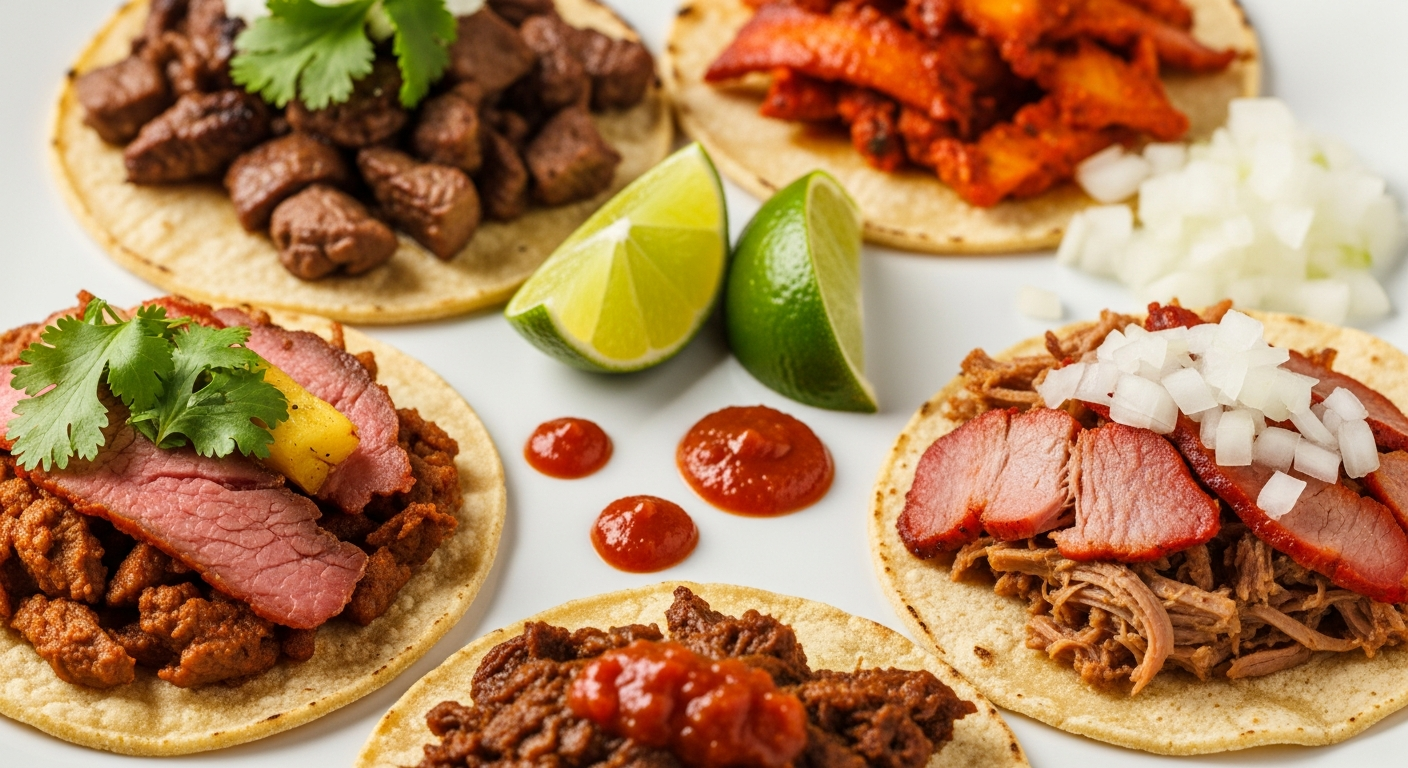
Forget the lettuce and shredded cheddar. An authentic street taco is garnished with what aficionados call the “Holy Trinity”: finely diced white onion, fresh cilantro, and a squeeze of lime. This combination provides a sharp, herbaceous contrast to the rich, fatty meat.
Tacos al Pastor: The King of the Street
If there is one taco that defines the Mexican street food experience, it is *Al Pastor*. Traditionally, this involves thinly sliced pork marinated in achiote and chilies, stacked into a towering “trompo” (spinning top) and roasted alongside a pineapple. While most home cooks don’t have a vertical rotisserie, you can replicate this flavor beautifully in a 2026 modern kitchen using a cast-iron skillet or a high-heat oven.
#
The Marinade
The secret lies in the *adobo*. You will need:
* 3 Guajillo chilies (seeded and soaked)
* 2 Ancho chilies (seeded and soaked)
* 2 tbsp Achiote paste
* 1/2 cup Pineapple juice
* 1/4 cup Apple cider vinegar
* 3 cloves of Garlic
* 1 tsp Dried Mexican oregano
Blend these ingredients into a smooth paste and marinate 2 lbs of thinly sliced pork shoulder for at least 4 hours.
#
The Cooking Process
To get that “trompo” texture, sear the pork in small batches in a screaming-hot skillet. The sugar in the pineapple juice will caramelize and char quickly. The most important step? Serving it with a sliver of fresh pineapple. The bromelain enzyme in the pineapple acts as a natural tenderizer and provides a sweet counterpoint to the earthy chilies.
Carne Asada: The Spirit of Northern Mexico
While the central regions of Mexico boast complex moles and slow-cooked meats, the North is all about the grill. *Carne Asada* (literally “grilled meat”) is a celebration of high-quality beef and wood-fire smoke.
#
Selecting the Cut
For the most authentic texture, choose **Skirt Steak** (*arrachera*) or **Flank Steak**. These cuts have a coarse grain that holds onto marinades and provides a satisfying chew.
#
The Marinade and Technique
Authentic Carne Asada isn’t just about salt; it’s about acidity. Mix lime juice, orange juice, crushed garlic, and a splash of soy sauce (a common “secret” ingredient in many modern Mexican households).
When it’s time to grill, the heat must be intense. You want a deep char on the outside while keeping the center medium-rare. Once the meat has rested, it is crucial to slice it *against the grain* and then dice it into small cubes. This ensures every bite is tender. Serve on a lightly charred corn tortilla with a spoonful of smoky *salsa roja*.
Tacos de Pescado: The Baja California Classic
Tracing its roots to the coastal towns of Ensenada and San Felipe, the fish taco is a testament to the freshness of the Pacific. In 2026, the trend has shifted back toward the “Baja Style”—a light, airy beer batter that protects the delicate white fish.
#
The Batter
Use a firm white fish like Mahi-Mahi, Cod, or Halibut. The batter should be a mixture of flour, cornstarch, baking powder, and a cold Mexican lager. The carbonation in the beer creates tiny air bubbles, resulting in a shatteringly crisp crust.
#
The Slaw and Crema
Unlike meat tacos, fish tacos require a bit more “dressing.” A classic Baja taco is topped with a crunchy cabbage slaw (never lettuce) and a “crema” made from Mexican sour cream, mayonnaise, lime juice, and a pinch of chipotle powder. This creamy element cuts through the oil of the fried fish, creating a refreshing, summer-ready bite.
The Art of the Salsa: More Than Just “Hot Sauce”
In the world of authentic Mexican street tacos, the salsa is not a condiment; it is a fundamental ingredient. A taco without the right salsa is incomplete. There are two essential varieties every home cook should master:
#
Salsa Verde (The Raw Power)
This is a bright, tangy sauce made from roasted tomatillos, serrano peppers, onion, garlic, and plenty of cilantro. The acidity of the tomatillos acts as a palate cleanser, making it the perfect companion for fatty meats like *Carnitas* or *Chicharrón*.
#
Salsa Roja (The Deep Smoke)
For this, you’ll want to toast dried chilies (like Arbol or Morita) until they are fragrant. Blend them with roasted tomatoes and garlic. This salsa is deeper, smokier, and provides a lingering heat that builds with every bite. The key to a professional-grade salsa in 2026 is to char your vegetables until the skins are blackened; that “burnt” flavor is what provides the authentic “street” soul.
Why 2026 is the Year of the “Slow” Taco
As we look toward the culinary landscape of 2026, there is a distinct move away from processed ingredients and toward ancestral techniques. Home cooks are no longer satisfied with store-bought spice packets. They are sourcing heirloom corn, seeking out specific dried chilies like *Pasilla* and *Cascabel*, and taking the time to hand-press their tortillas.
This “slow” approach to fast food is what makes authentic street tacos so special. It is a cuisine that rewards patience. Whether you are slow-braising beef cheeks for *Tacos de Cabeza* or allowing your *Al Pastor* to marinate overnight, the depth of flavor you achieve is a direct reflection of the care put into the preparation. Authentic Mexican cooking is an act of love, and there is no better way to share that love than through a perfectly constructed taco.
FAQ: Mastering Authentic Mexican Street Tacos
**1. Can I use flour tortillas instead of corn?**
While you *can*, corn tortillas are the standard for most authentic street tacos. They provide an earthy flavor and sturdy texture that complements the fillings. If you must use flour, look for “Sonoran-style” tortillas, which are thinner and more pliable than standard supermarket versions.
**2. What is the best cut of meat for general street tacos?**
For beef, go with Skirt or Flank steak. For pork, Pork Shoulder (Boston Butt) is king because its high fat content keeps the meat moist during high-heat cooking. For chicken, always use thighs; breast meat dries out too quickly on the grill.
**3. Do I really need to double the tortillas?**
Yes! Street tacos are often juicy and topped with salsa. A single corn tortilla can become soggy and tear. Using two tortillas (the “copy” method) ensures the taco stays together from the first bite to the last.
**4. How do I make my salsas less spicy?**
Most of the heat in a chili resides in the seeds and the white internal membranes (the pith). If you want the flavor of the chili without the burn, meticulously remove all seeds and ribs before blending. Using more roasted tomatoes or tomatillos will also dilute the heat.
**5. What is the difference between “Street Tacos” and “Regular Tacos”?**
In a culinary context, “Street Tacos” refers to the traditional Mexican style: small corn tortillas, simple meat preparations, and minimal garnishes (onion, cilantro, lime). “Regular” tacos often refers to the Americanized version featuring large flour shells, ground beef, lettuce, tomato, and yellow cheese.
Conclusion: Bringing the Street Home
Recreating authentic Mexican street taco recipes at home is more than just a cooking project; it is a sensory journey. By focusing on high-quality corn tortillas, mastering the balance of your marinades, and respecting the tradition of the “Holy Trinity” garnish, you can transport your kitchen to the heart of Mexico.
As we embrace the flavors of 2026, let us remember that authenticity isn’t about rigid rules—it’s about respecting the ingredients and the culture they come from. So, char your peppers, squeeze your limes, and don’t be afraid of a little smoke in the kitchen. The perfect taco is waiting for you, and it’s much closer than the nearest street corner. *¡Buen provecho!*