





















The Ultimate Guide to Essential Japanese Pantry Staples 2026
The landscape of home cooking has undergone a profound transformation, and as we navigate 2026, the “Umami Revolution” has fully taken hold in kitchens across the globe. No longer is Japanese cuisine relegated to specialized restaurants or occasional takeout; it has become a fundamental pillar of the modern home cook’s repertoire. The appeal lies in the Japanese culinary philosophy of *washoku*—a balance of flavor, nutrition, and aesthetic beauty. In 2026, home cooks are prioritizing ingredients that offer deep complexity with minimal processing, focusing on fermented foods and high-quality seasonings that transform simple vegetables and proteins into gourmet experiences. Whether you are a seasoned chef or a curious beginner, building a Japanese pantry is the most effective way to elevate your daily meals. This guide explores the essential Japanese pantry staples 2026 that will provide you with the foundation to create authentic, soul-warming dishes right in your own kitchen.
1. The Liquid Trinity: Soy Sauce, Mirin, and Sake
To understand Japanese flavor profiles, one must first master the “Liquid Trinity.” These three ingredients form the backbone of almost every savory Japanese sauce, glaze, and simmered dish.
**Soy Sauce (Shoyu)**
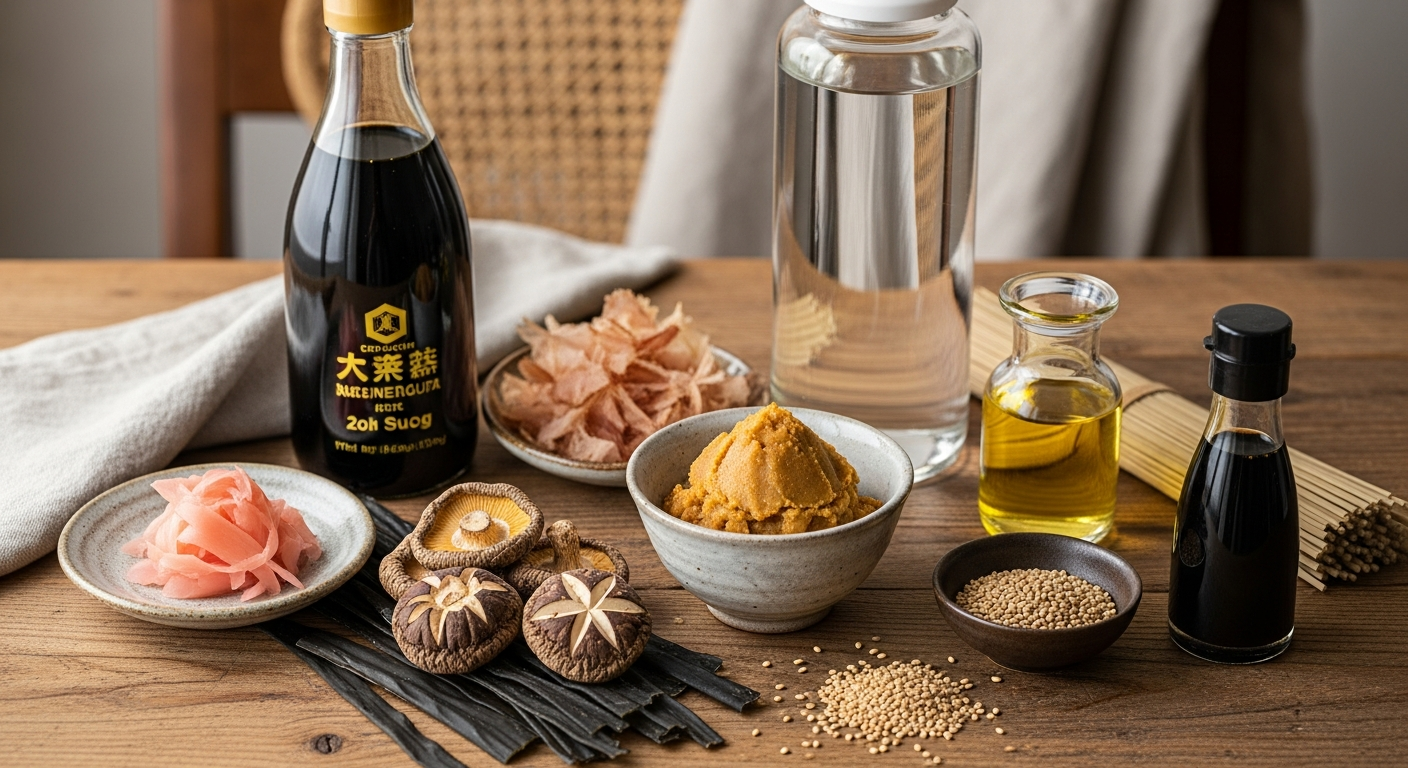
In 2026, the discerning home cook looks beyond the generic “all-purpose” soy sauce. The pantry should ideally contain *Koikuchi* (the standard dark soy sauce) for general seasoning and *Usukuchi* (light soy sauce) for dishes where you want to preserve the natural color of ingredients, such as in clear soups. For those seeking gluten-free options or a deeper, richer flavor, *Tamari* remains an essential staple. The trend in 2026 focuses on artisanal, naturally brewed soy sauces that have aged in cedar barrels, providing a complex bouquet of aromas that mass-produced versions simply cannot match.
**Mirin**
Mirin is a sweet rice wine specifically for cooking. It provides a mild sweetness and a beautiful luster to teriyaki sauces and glazes. When shopping in 2026, look for *Hon-mirin* (true mirin), which contains about 14% alcohol and no added sugar or corn syrup. The natural fermentation process creates a depth of sweetness that balances the saltiness of soy sauce and helps to eliminate the “fishy” odors in seafood dishes.
**Sake**
Cooking sake is used to tenderize meats, remove odors from seafood, and add “koku” (richness/body) to dishes. While you can use drinking sake, many home cooks in 2026 prefer dedicated cooking sakes that are formulated to enhance the savory notes of food. It is the secret ingredient in many stir-fries and braises that provides that elusive “restaurant-quality” finish.
2. The Heart of Umami: Miso and Dashi
If the liquid trinity provides the seasoning, Miso and Dashi provide the soul. These are the building blocks of umami—the fifth taste that signifies savory deliciousness.
**Miso Paste**
Miso is a fermented soybean paste that serves as a probiotic powerhouse. In 2026, the focus is on diversity. A well-stocked pantry should feature at least two types:
* **Shiro Miso (White):** Fermented for a shorter period, it is mild, slightly sweet, and perfect for dressings, light soups, and even modern fusion desserts like miso caramel.
* **Aka Miso (Red):** Fermented longer, it has a pungent, salty, and deep earthy flavor, ideal for hearty stews and marinades for red meats.
* **Awase Miso:** A blend of the two, providing a versatile balance for everyday miso soup.
**Dashi (The Essential Stock)**
Dashi is the foundation of Japanese soups and sauces. It is traditionally made from *Kombu* (dried kelp) and *Katsuobushi* (dried bonito flakes). In 2026, while many enthusiasts still enjoy the meditative process of making dashi from scratch, high-quality “dashi packs”—which resemble giant tea bags filled with ground kelp and bonito—have become a staple for the busy but health-conscious cook. These packs offer the authentic taste of dashi in minutes without the additives found in older instant powders. For vegans, dried Shiitake mushrooms remain a critical pantry item to create a rich, plant-based dashi.
3. Vinegars, Oils, and Essential Condiments
To achieve the bright, high-definition flavors characteristic of Japanese cuisine, you need the right acids and fats.
**Rice Vinegar (Su)**
Japanese rice vinegar is milder and less acidic than Western white distilled vinegar. It is essential for making sushi rice, but in 2026, it is used increasingly in salad dressings and quick-pickling vegetables (*Tsukemono*). Its subtle sweetness enhances flavors without overpowering them.
**Toasted Sesame Oil**
Unlike light sesame oil used for frying, Japanese toasted sesame oil is used as a finishing oil. A few drops added at the end of cooking provide a nutty, aromatic punch that defines dishes like *Gyoza* dipping sauces and cold noodle bowls.
**Kewpie Mayo and Tonkatsu Sauce**
No modern Japanese pantry is complete without the “fun” condiments. Kewpie Mayo, made with egg yolks rather than whole eggs and a touch of MSG (or its natural yeast extract equivalents in 2026), offers a creaminess that has won over chefs worldwide. Similarly, Bull-Dog brand Tonkatsu sauce—a thick, tangy, vegetable-and-fruit-based sauce—is the ultimate topping for fried foods, providing a sweet-and-savory contrast that is addictive.
4. Spices and Dry Seasonings: The Texture Makers
Texture and aroma are just as important as taste in Japanese cooking. This is where dry seasonings play a pivotal role.
**Furikake**
Furikake is a dry Japanese seasoning meant to be sprinkled over rice. In 2026, the varieties are endless—from salmon and egg to shiso leaf and wasabi. It is the ultimate “pantry hack” for a quick meal, turning a simple bowl of steamed rice into a flavorful feast.
**Shichimi Togarashi (Seven-Spice Blend)**
This iconic blend contains chili flakes, orange peel, sesame seeds, ginger, and seaweed. It adds a gentle heat and a complex citrusy aroma to udon soups, grilled meats, and even avocado toast. It is a staple for those who want to add “zing” to their dishes without overwhelming the palate with spice.
**Yuzu Kosho**
In 2026, Yuzu Kosho has moved from a specialty ingredient to a mainstream favorite. This fermented paste made from chili peppers, yuzu peel, and salt provides a spicy, salty, and floral citrus kick. It is exceptionally versatile—use it as a condiment for grilled chicken, stir it into pasta, or mix it into salad dressings for a modern Japanese twist.
**Wasabi (Paste and Powder)**
While fresh wasabi is a luxury, high-quality pastes in tubes or powders that you reconstitute with water are essentials. In 2026, consumers are looking for “Hon-wasabi” on the label, indicating a higher percentage of actual wasabi root rather than just dyed horseradish.
5. Grains and Noodles: The Foundation
The bulk of the Japanese diet relies on high-quality carbohydrates that act as a canvas for the bold flavors of the seasonings mentioned above.
**Short-Grain Rice**
Japanese rice (like *Koshihikari* or *Sasanishiki*) is non-negotiable. It has a unique stickiness and sweetness that allows it to be eaten with chopsticks and provides the correct texture for sushi. In 2026, many home cooks are also opting for *Haigamai* (half-milled rice), which retains the nutritious germ but has the texture of white rice, or *Genmai* (brown rice) for its nutty flavor and fiber content.
**Noodles: Soba, Udon, and Ramen**
* **Soba:** Made from buckwheat, these earthy noodles are excellent served cold with a dipping sauce or warm in broth. They are a favorite in 2026 for their gluten-free potential and high protein content.
* **Udon:** Thick, chewy wheat noodles that are the ultimate comfort food. Keep dried or vacuum-sealed “fresh” packs in your pantry for quick meals.
* **Ramen:** While instant ramen is a classic, 2026 sees a rise in “alkaline noodles” that can be stored dry. These have the specific springy texture required for an authentic ramen experience at home.
6. The 2026 Pantry Staples: Panko and Curry Roux
To round out your pantry, you need the ingredients that facilitate the “Yoshoku” (Western-style Japanese) dishes that are beloved by families.
**Panko Breadcrumbs**
Panko is lighter, crispier, and airier than traditional breadcrumbs. It doesn’t absorb as much oil, making it the perfect coating for *Tonkatsu* (breaded pork) or even for topping baked mac and cheese. Its popularity in 2026 continues because it stays crunchy longer than standard breading.
**Japanese Curry Roux**
Japanese curry is a category of its own—thick, sweet, and mild compared to Indian or Thai curries. Sold in convenient blocks, the roux is a mix of flour, fat, and spices. It is a “comfort food” staple that allows you to make a filling meal using whatever vegetables and proteins you have in your fridge. In 2026, we see a rise in roux brands that eliminate palm oil and artificial preservatives, catering to the health-conscious consumer.
***
FAQ: Essential Japanese Pantry Staples 2026
**Q1: I’m just starting out. What are the top three items I should buy first?**
A: If you’re a beginner in 2026, start with **Soy Sauce (Koikuchi)**, **Mirin**, and **Miso Paste**. With these three, you can create marinades, dressings, and the iconic miso soup, covering about 60% of common Japanese home-cooked recipes.
**Q2: Does Miso paste go bad? How should I store it?**
A: Miso is a fermented product and has a very long shelf life. However, for best quality, store it in the refrigerator. In 2026, many brands come with a small piece of parchment paper on top—keep that paper there to prevent the surface from drying out and oxidizing.
**Q3: Is there a significant difference between Japanese rice and regular long-grain rice?**
A: Yes, the difference is massive. Long-grain rice (like Basmati or Jasmine) is fluffy and grains remain separate. Japanese rice is short-grain and contains more starch, making it sticky. You cannot make authentic sushi or rice balls (*Onigiri*) with long-grain rice; the texture will be completely wrong.
**Q4: How can I make my Japanese pantry staples vegan-friendly?**
A: Most Japanese staples like soy sauce, mirin, and rice vinegar are naturally vegan. The main concern is Dashi. In 2026, it is very easy to find **Kombu Dashi** or **Shiitake Dashi**, which are 100% plant-based, instead of the traditional bonito (fish) based versions.
**Q5: Can I use “Sushi Vinegar” for everything?**
A: “Sushi Vinegar” is rice vinegar that has already been seasoned with sugar and salt. While it’s convenient for rice, it might make other savory dishes too sweet. For maximum versatility in 2026, buy plain **Rice Vinegar** and add your own sugar or salt as needed.
***
Conclusion
Building a Japanese pantry in 2026 is an investment in both your health and your culinary creativity. The beauty of these staples lies in their versatility; once you have soy sauce, miso, and mirin on your shelves, you aren’t just limited to Japanese recipes. These ingredients are “flavor bombs” that can be used to deglaze a pan for a French sauce, add depth to a vegan Bolognese, or provide a nutty crunch to a morning salad.
As we have seen, the trend for 2026 is moving toward authenticity, artisanal quality, and clean labels. By choosing high-quality fermented products and essential grains, you are embracing a way of eating that celebrates the seasons and respects the ingredients. Start small, perhaps with the “Liquid Trinity,” and gradually expand your collection as you discover the joy of Japanese home cooking. With these essential Japanese pantry staples 2026 at your fingertips, you are well on your way to mastering a cuisine that is as timeless as it is delicious.