













Master the Flame: The Best Cast Iron Skillet Recipes for 2026
There is a certain magic that happens when a heavy, seasoned piece of iron meets a roaring flame. In the modern kitchen of 2026, where high-tech gadgets and smart appliances often dominate the counter space, the humble cast iron skillet remains the undisputed heavyweight champion of flavor. Whether you are a seasoned chef or a home cook looking to elevate your weeknight repertoire, the best cast iron skillet recipes offer more than just a meal—they offer a connection to a timeless culinary tradition. From the perfect, crusty sear on a dry-aged ribeye to the airy, golden rise of a giant Dutch Baby pancake, the versatility of this pan is unmatched. Its superior heat retention and natural non-stick surface make it the ultimate tool for achieving textures that stainless steel or non-stick pans simply cannot replicate. In this guide, we explore the definitive recipes that every enthusiast should master this year to unlock the full potential of their ironware.
1. The Art of the Morning Sizzle: Breakfast Classics
The cast iron skillet was practically invented for breakfast. Because it holds heat so effectively, it ensures that your potatoes get that coveted glass-shattering crunch while keeping the interior fluffy and light.
#
The Ultimate Skillet Hash
A great hash is the ultimate test of a cast iron pan. Start by rendering thick-cut bacon until crispy, then use that flavorful fat to sauté diced Yukon Gold potatoes. The trick to the best skillet hash is patience; let the potatoes sit undisturbed for several minutes at a time to develop a deep, mahogany crust. Toss in bell peppers, onions, and perhaps some smoked paprika or 2026’s favorite spice blends like fermented chili flakes. Finish by cracking four eggs directly into “wells” in the hash and sliding the whole pan into the oven for five minutes.
#
The Legendary Dutch Baby
If you haven’t made a Dutch Baby in your cast iron, you haven’t lived. This “giant pancake” relies on the intense residual heat of the skillet to puff up like a souffle. Preheating the pan is the secret. As soon as you pour the thin batter into the scorching hot, butter-coated iron, the edges begin to climb the walls of the skillet. Serve it with a dusting of powdered sugar, a squeeze of fresh lemon, and seasonal berries for a centerpiece breakfast that looks far more difficult than it actually is.
2. Mastering the Sear: High-Heat Meat Entrees
When it comes to protein, “Maillard reaction” is the name of the game. This chemical reaction between amino acids and reducing sugars gives browned food its distinctive flavor. No vessel facilitates this better than cast iron.
#
The Reverse-Sear Ribeye
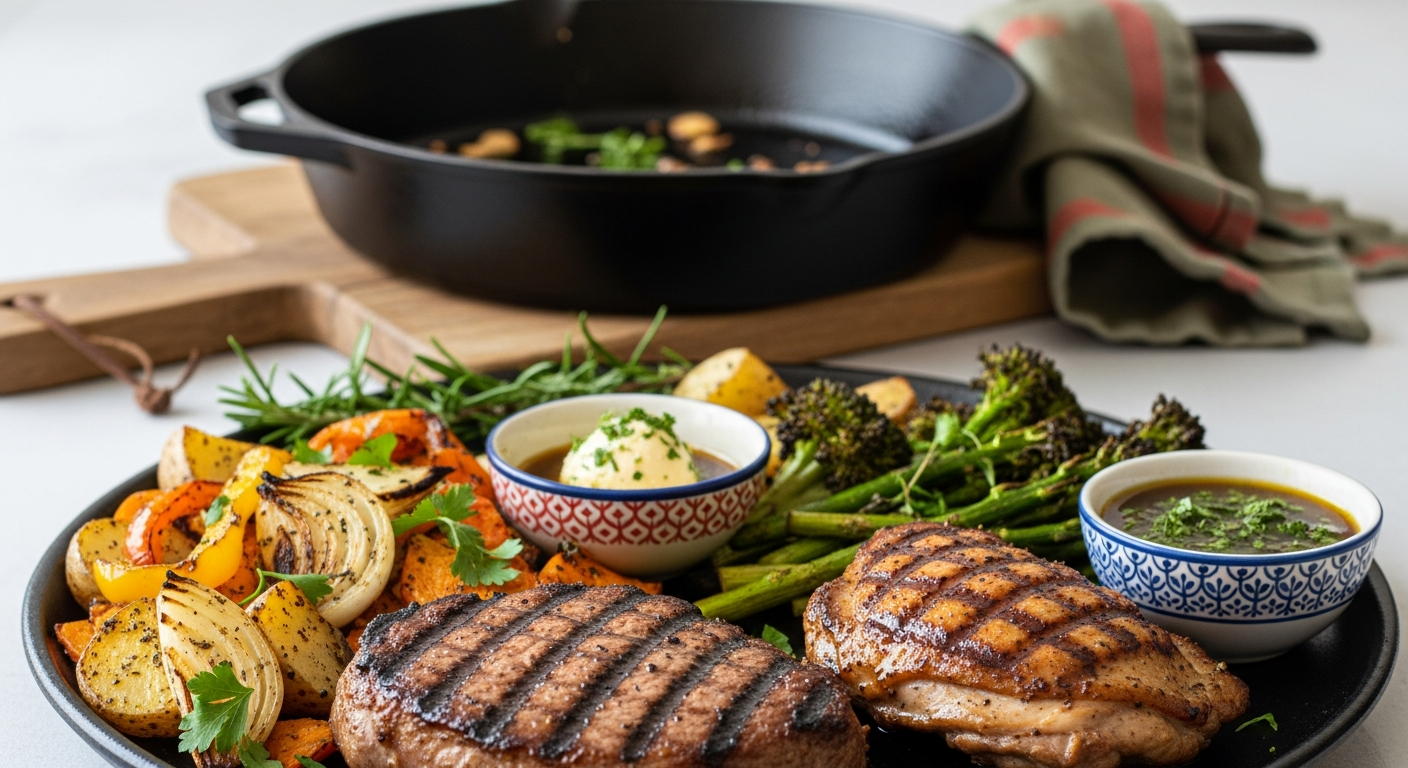
For 2026, the reverse-sear remains the gold standard for steak enthusiasts. Season a thick-cut ribeye heavily with kosher salt and black pepper. Roast it in a low-temperature oven until it reaches an internal temperature of 115°F, then transfer it to a screaming-hot cast iron skillet. The goal here isn’t to cook the meat—it’s already cooked—but to create a crust. Add a knob of cultured butter, a few cloves of smashed garlic, and fresh rosemary. Baste the steak continuously as it sears for 60 seconds per side. The result is a steakhouse-quality crust with a perfectly edge-to-edge pink interior.
#
Crispy Skin Chicken Thighs
Chicken thighs are a cast iron’s best friend. By starting the thighs skin-side down in a cold skillet and gradually raising the heat, you render out the fat slowly, resulting in skin that is as thin and crispy as a potato chip. Once the skin is golden, flip them and finish the cooking process in the oven. The iron ensures the heat is distributed evenly, preventing the hot spots that often lead to scorched skin and raw meat in thinner pans.
3. Global Flavors: Skillet Pizzas and Shakshuka
The heavy walls of a cast iron skillet act like a mini-stone oven, making it the perfect vessel for international dishes that require high, radiating heat.
#
Deep-Dish Skillet Pizza
Forget the delivery man; the best pizza you’ll eat in 2026 comes from your skillet. Press your dough into a well-oiled pan, ensuring it reaches up the sides. The oil effectively “fries” the bottom of the crust, creating a crunch that is reminiscent of Detroit-style or Chicago-style pizza. Top with a robust tomato sauce, plenty of low-moisture mozzarella, and your favorite toppings. The iron’s heat ensures the bottom is fully cooked and crisp by the time the cheese on top is bubbly and charred.
#
North African Shakshuka
Shakshuka—eggs poached in a spicy tomato and pepper sauce—is a visual and culinary masterpiece. The cast iron skillet is ideal here because it transitions seamlessly from the stovetop (where you sauté your aromatics) to the table. The iron retains heat so well that the sauce will stay simmering for twenty minutes after you’ve taken it off the flame, keeping your brunch warm until the last piece of pita bread has been used to swipe the pan clean. *Note: Ensure your skillet is well-seasoned before cooking acidic tomato-based dishes, or opt for an enameled cast iron version.*
4. Plant-Forward Skillet Delights
As we move into 2026, plant-based cooking has become more sophisticated, moving away from “meat substitutes” toward celebrating the vegetables themselves. Cast iron excels at caramelizing the natural sugars in vegetables.
#
Honey-Glazed Skillet Cornbread
While technically a side dish, a proper Southern-style cornbread made in cast iron is often the star of the show. The key is to melt butter in the skillet until it’s foaming before pouring in the batter. This creates a “fried” outer crust that is dark and savory, contrasting beautifully with a sweet, moist interior. For a modern twist, fold in charred corn kernels and jalapeños, and finish with a drizzle of hot honey.
#
Roasted Root Vegetable Medley with Chimichurri
Take carrots, parsnips, and beets, toss them in olive oil and sea salt, and roast them in a preheated skillet. The contact with the hot iron creates flat, caramelized surfaces on the vegetables that you simply can’t achieve on a baking sheet. Once tender, toss them with a vibrant, acidic chimichurri sauce. The acidity of the sauce cuts through the earthy richness of the roasted vegetables, creating a balanced and hearty vegetarian main course.
5. One-Pan Weeknight Wonders
Efficiency is the hallmark of the modern home cook. The “one-pan meal” is not just a trend; it’s a lifestyle. Cast iron reduces cleanup while maximizing flavor depth.
#
Skillet Shepherd’s Pie
Traditionally made with lamb (or beef for Cottage Pie), this dish is transformed in a skillet. Sauté your meat and vegetables, add your broth and thickeners to create a rich gravy, and then spread a thick layer of mashed potatoes directly over the top. Use a fork to create “peaks” in the potatoes. When you slide the skillet under the broiler, the cast iron keeps the filling bubbling while the potato peaks turn golden brown and crispy.
#
The 2026 Skillet Lasagna
Traditional lasagna requires boiling noodles, layering in a deep dish, and a long bake time. Skillet lasagna is the “hacker’s” version. Break dry lasagna noodles into pieces and cook them directly in a skillet filled with marinara and water. Once the noodles are al dente and the sauce has thickened, dollop ricotta cheese over the top and sprinkle with parmesan. The cast iron provides a rustic, “burnt-cheese edge” around the perimeter of the pan that is widely considered the best part of the meal.
6. Decadent Skillet Desserts
Don’t put that skillet away once dinner is over. After a quick wipe-down, your cast iron is ready to become the ultimate baking dish for desserts that are meant to be shared.
#
The “Pizookie” (Giant Skillet Cookie)
There is something uniquely satisfying about a warm, gooey chocolate chip cookie served directly out of a pan. By baking a large batch of cookie dough in a 10-inch skillet, you achieve a paradoxical texture: the edges are crispy and caramelized (almost like a brownie), while the center remains soft and underbaked. Serve it warm with three large scoops of vanilla bean ice cream and several spoons.
#
Seasonal Fruit Cobbler
Whether it’s blackberries in the summer or apples in the autumn, a skillet cobbler is the easiest way to highlight seasonal produce. Sauté the fruit briefly with sugar and spices in the skillet to start the juices flowing, then drop spoonfuls of biscuit dough or crumble topping over the top. The cast iron ensures the bottom of the fruit layer gets thick and jammy, while the top of the cobbler stays light and crisp. It’s a rustic dessert that celebrates the beauty of simple ingredients.
***
Frequently Asked Questions (FAQ)
**1. Can I cook acidic foods like tomatoes in my cast iron skillet?**
Yes, but with a caveat. If your skillet is well-seasoned (meaning it has a thick layer of polymerized oil), you can cook acidic foods for short periods (30-40 minutes) without any issues. However, long-simmering sauces can strip the seasoning and give the food a slightly metallic taste. For long-simmered tomato sauces, enameled cast iron is the better choice.
**2. Is it okay to use soap to clean my skillet in 2026?**
The old myth that soap ruins cast iron is officially debunked. Modern dish soaps are gentle and do not contain lye, which was the ingredient in old-fashioned soaps that would strip seasoning. A little bit of soap and warm water is perfectly fine for cleaning off grease, provided you dry the pan immediately and apply a light coat of oil.
**3. How do I know when my skillet needs to be re-seasoned?**
If food begins to stick excessively, or if the surface of the pan looks dull or greyish rather than shiny and black, it’s time for a touch-up. You may also see small flakes of black material coming off; this is usually carbonized food or old seasoning, indicating the pan needs a good scrub and a fresh layer of oil baked on in the oven.
**4. Why is my cast iron skillet smoking when I heat it up?**
This usually happens because there is residual oil or food particles left on the pan from the last use, or you are using an oil with a low smoke point (like extra virgin olive oil) for high-heat cooking. For searing, always use high-smoke-point oils like avocado oil, grapeseed oil, or refined coconut oil.
**5. Can I use my cast iron skillet on a glass-top or induction stove?**
Absolutely. Cast iron is ferromagnetic, making it one of the best materials for induction cooktops. On glass-top stoves, just be careful not to “slide” the heavy pan across the surface, as the textured bottom of the iron can scratch the glass. Lift the pan to move it instead.
***